BUSINESS, noun, 1. a person’s regular occupation, profession, or trade. 2. the practice of making one’s living by engaging in commerce.
Music is a business as well as an art form. My compositions are like children; having them is one thing, launching them into the world, another. This takes networking, using social media, learning how to represent myself, and finding others who will support and represent my work.
Break In.
If the front door is not open (because of race, gender , religion, education, or just being at the wrong place at the wrong time), break in through the back door or window. No matter how you get in, you are in.
Accept and build on small opportunities.
Compose music for anyone. Find ensembles in your community and compose for them. Have your work performed. Learn. Compose more. Better yet, start your own ensemble.
Remember your self worth.
Understand copyright, publishing, and recording rights – the ways your music can generate income. Have an attorney or someone in the business look at any contract before signing it.
Create your own working sabbatical.
When I started my career, I worked many jobs to support myself. Using the latte-principal (saving the $5 cost of a latte a day), I saved for ten ye ars. When I got a commission from the Kronos Quartet, that and my savings allowed me to launch into being able to compose full time.
Develop a personal language to expresses your artistic process.
Over the years I learned to share my feelings and emotions that accompany composing music creating a deeper connection with the public at a human level.
Communicate about your work.
Taking the time to use all the tools to get the word out about your work is just part of being an artist. Learn how to write grants, find commissions, create consortiums and promote yourself.
It is about the relationship.
Creating a career as a composer is like fundraising – it is not about the money. Networking is key – going to concerts, introducing yourself, creating relationships, builds connection for future business or collaborations, etc.
Make ‘thank you’ a key part of your interaction with others.
I dedicate one day each week to say ‘thank you’ to anyone I have had contact with. Expressing appreciation is so important, even when rejected. And, by the way, at the rehearsal of your music, be awesome to the performers.
Advocate and join.
Show up at concerts and conferences. Support other composers and musicians as colleagues and friends. Get involved with advocacy organizations! Speak out against ageism, sexism, cronyism where ever you see it.
 Share your joy.
Communicate your love of the work with others. I find sharing rather than teaching, motivating rather than lecturing, including rather than talking to, brings others into the process on an equal standing.
Abundance rather that scarcity.
At the core of my artistic endeavor is a sense of abundance and possibility. There is always a new piece to compose, and a new opportunity to explore. And if I don’t hear or see one, I set out to sniff it out – using all the tools I have honed over the life time. There is always something more.

 Heave your heart into your mouth – often.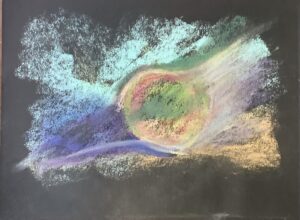
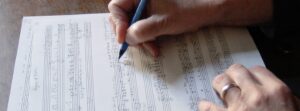 There, right there is the magic – that lift, as if you were about to fly. The upward motion pulls at gravity. I am a kayak, rushing downstream only to hit a rock. As I fly in the air, the suspension seems longer than possible; my heart stops beating for a endlessly long moment – time is distorted.
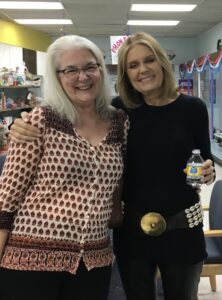 My mother was the first feminist in the family. She read Gloria Steinem, Kate Millett, Germaine Greer and Betty Friedan. She taught women’s studies and went to on countless marches. True, she often spat and lectured. A professor at the State College in Oneonta, mother of five, she knew the limits of her salary and position. She had valid grievances and was angry.
 the plates. We waited to see what emerged. Colors bloomed several days later, a brilliant white and a poisonous looking orange – a world invisible – existing only when it was allowed to grow by itself.
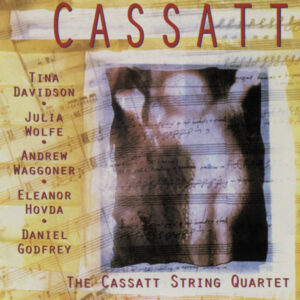 of the Greek prophetess who was never listened to or believed, and my hope for better times in the future. Women Dreaming, for mixed ensemble and piano, was my continued dreaming of possibilities. River of Love, River of Light, a seven movement choral piece, was my understanding of the female face of God.
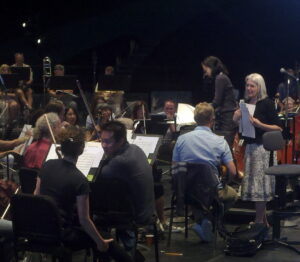 In the music world, a new piece is premiered after working with the performers in rehearsals. We confer about tempos, do a last bit of editing, talk about the musical heart of the piece and how to express it. At the performance, I introduce the work to the audience, or do a pre-concert presentation. But mostly, I am in the audience, listening. I stand for the applause, usually from my seat, or bound up to the stage for a quick bow. During the intermission and after the concert, a few audience members warmly clasp my hands. But most of them dodge around me. Did they not like my work? Or is it too vulnerable to express an opinion face to face?
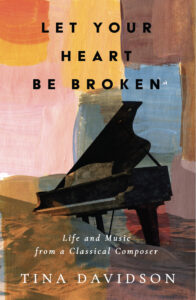 podcasts, interviews, and book tours. I get emails, messages or posts from readers, sometimes several over a week, letting me know they are halfway through, almost done, they couldn’t put it down until 4 AM. It reads like a thriller, has a musical lilt, they resonated with my words. I have introduced them to contemporary music, articulated something about composing andmy deep relationship to sound – I have put words to an art form that is generally wordless. They feel let in.
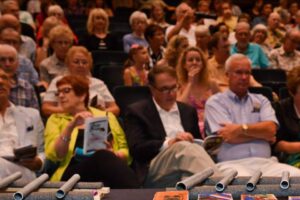 performing abilities. The works they perform are primarily historical, often hundreds years old, and referred to as masterpieces. Contemporary music – our living culture – is not performed with any regularity.