• Skip to main content
  • Skip to footer

Tina Davidson

Composer

  • About
    • Biography
    • Community Engagement
  • Press
    • Press
    • Interviews & Podcasts
  • Works
    • Works
    • Listen
    • Recordings
    • Publications
  • Blog
  • Contact

Tina Davidson

Random Thoughts, #1

February 1, 2021 by Tina Davidson

from my music journal

August 3

A new piece of music stirs within me. I feel it in my stomach. It twists and wrenches. I know it is time to start, but I bargain for a later date. The piece quiets for a moment, then twists again. There is no real latitude in here. It pretends to placate me, but ultimately is relentless. I am relieved. Without its insistence, I am lost.

August 24

Marc Chagall wrote, “In my paintings I have hidden my love.”   Why does he hide his love? In my work, I want my love to pour out.

October 20

I am testing the difference between knowing and knowledge. Knowledge is a noun, knowing is a verb. Knowledge is permanence, an arrival to a destination, a measure of power, and a method of control; it is a command, and a grasp with expertness or skill. Knowing, on the other hand, is to perceive, sense, or see; it is to trust and listen, to hear and accept things beyond one’s imagination. Knowing is not being able to explain, but being able to expand and grow continuously. Unfixed and inexhaustible. Knowing is to be.

Fear, fear!? What is there to fear? Knowing is to recognize oneself. What is this crisis, then, this debate, this holding back?
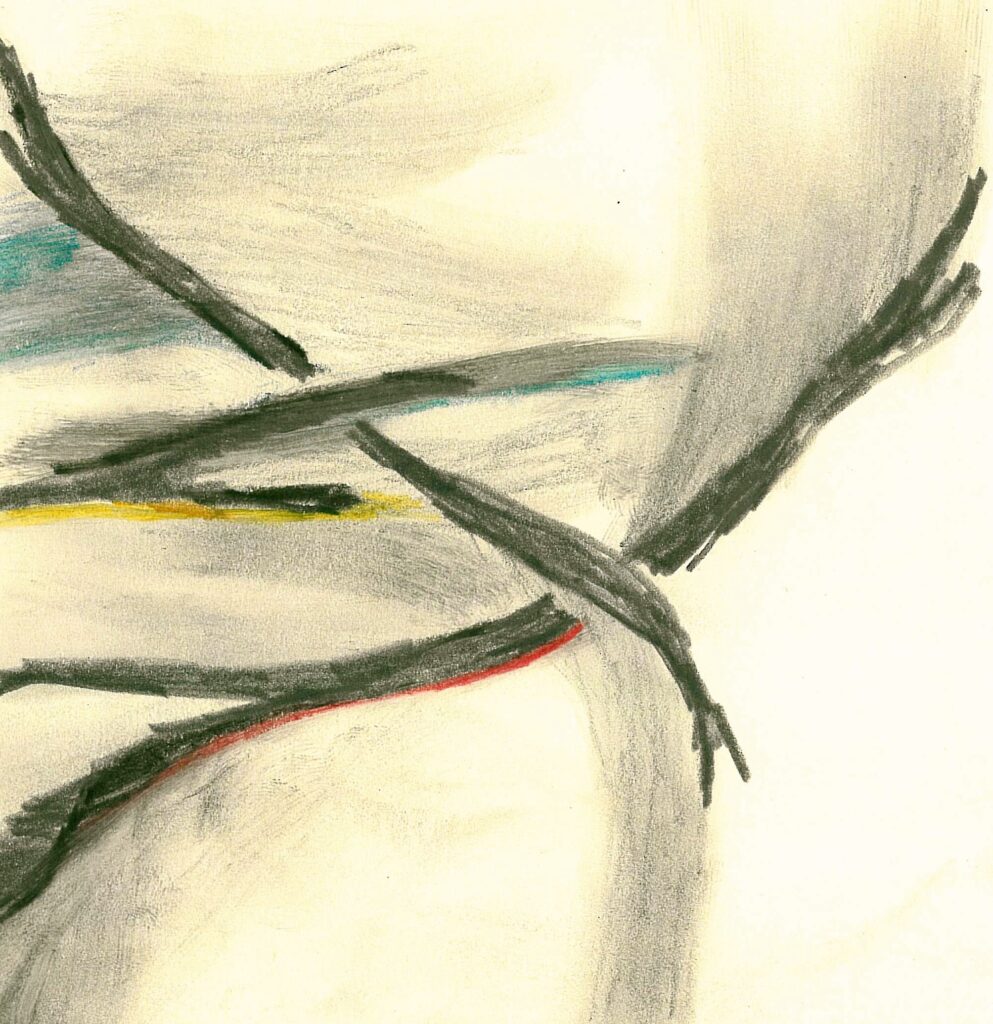
Deisis, drawing by Tina Davidson

April 3

My music is an experience, not an event. Most music is circular and contained. Mine, on the other hand, is languid and rests on its elbows like a horizon. I create a linear shape, where the music evolves, transforms, and becomes. The listener moves with the music though a passage of time, into another place. In the end, the music breaks open like an egg, its content finally revealed. The gift is the inner and outer, the private and public. The soul unveiled.


Excerpted from Grief’s Grace, A Memoir by Tina Davidson.  © Tina Davidson, 2021

Listen: Delight of Angel for string quartet: 

It is My Heart Singing, music by Tina Davidson, Albany Records, TROY842, 2006

Performed by the Cassatt Quartet (Muneko Otani, Jennifer Leshnower, Tawnya Popoff, Nicole Johnson), Stephen Manes and Caroline Stinson Purchase: https://www.amazon.com/My-Heart-Singing-Tina-Davidson/dp/B000FO443K
Filed Under: Uncategorized Tagged With: creativity, drawings by women, music by women, music journal, Tina Davidson, writing about music

Cassandra Sings; Changing the Music

January 13, 2021 by Tina Davidson

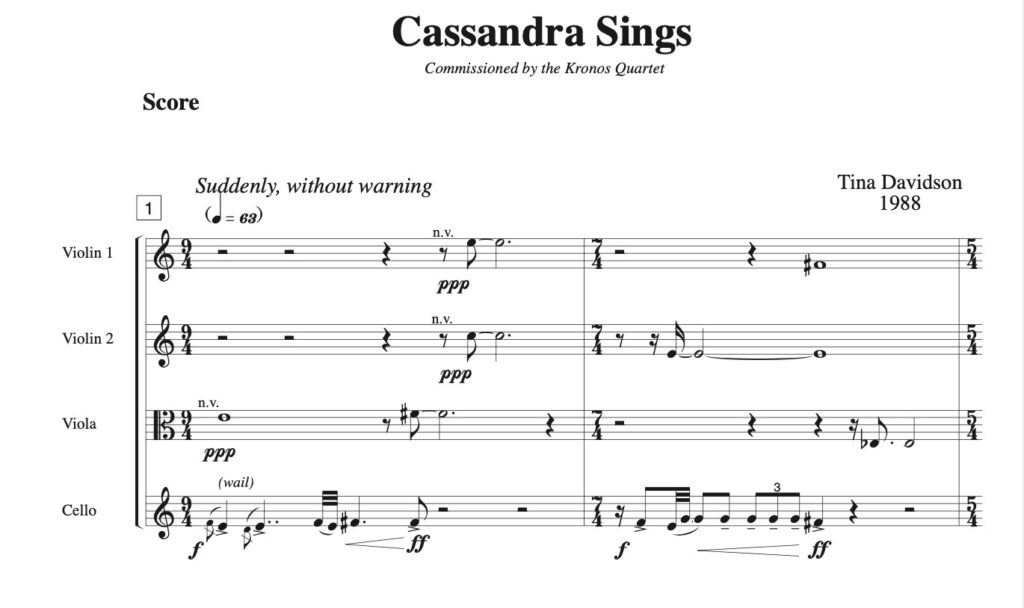
a commissioned by the Kronos String Quartet

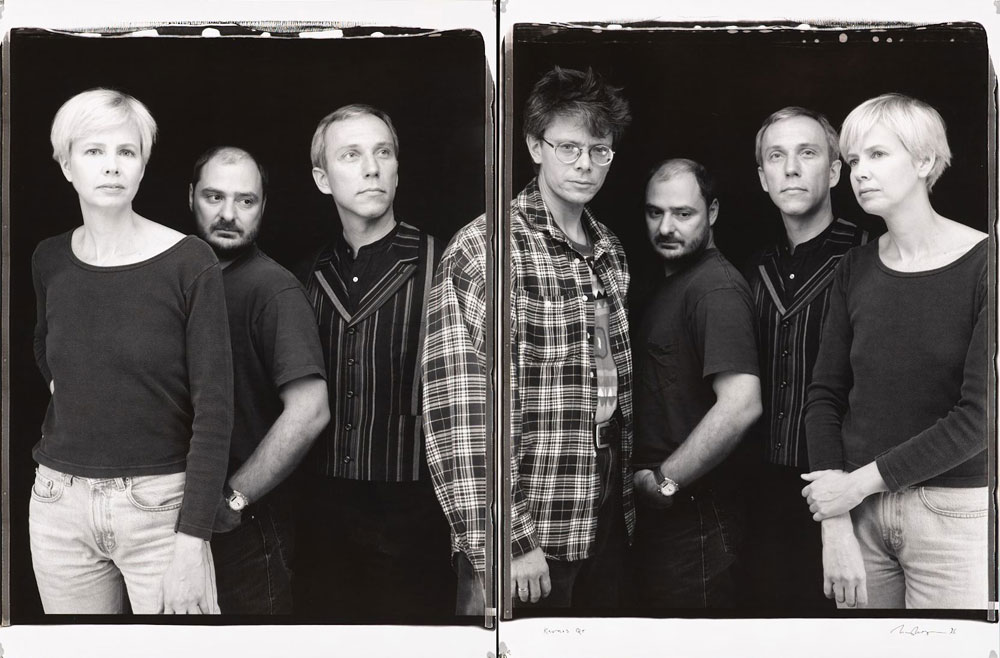
One day in 1988, David Harrington, first violinist of the Kronos Quartet, calls me. Weeks before, on a whim, I had sent the quartet a recording of my saxophone quintet, Transparent Victims without invitation or introduction. “We listened to your music and loved it,” Harrington says. “We want to commission you for a new string quartet – say 15-17 minutes long?”  I am astonished. 

Not long afterwards I fly down to the New Music America Festival in Miami to meet with the quartet. I hear them premiere Steve Reich’s powerful Different Trains and Eleanor Hovda’s beautiful and evocative Lemniscates. I sit and dream through their four-hour performance of Morton Feldman’s String Quartet, No. 2.

Back at home, I being to compose. I title the piece, Cassandra Sings, after the mythological Cassandra in the play Agamemnon by Aeschylus. There Cassandra ‘sings’ her lines, for she, like the chorus, speaks the truth – she sings the reality of life.

The work on the quartet is a sickening roller-coaster ride. Writing the first section is like going through a manic-depressive storm, at times ecstatic, at others agonizingly difficult. The rhythm tears along, bumping into sounds that are both unexpected and comfortable. I spin through reams of material, yet it is all connected somehow; tense, pressured, chased, inescapable, and swept away. I stitch together the fabric of the piece carefully, paying great attention to the transitions. The direction surprises the ear, and is, somehow, just right. The second section rolls out easily. Already I am at Cassandra’s true joy. My dreams are released. I soar along with my music.

I fly to San Francisco to rehearse with the Kronos Quartet. The week is black and desolate. In three days they have only rehearsed two thirds of my quartet and I have yet to hear the whole piece through. Each day they inch through a small section, making almost no progress. I am exhausted. The weather is bone cold and I take long baths.

A week later I am back with the quartet in Minneapolis. At the dress rehearsal in the Walker Art Center, they play my piece in an extraordinary manner, with every note of this difficult piece in place – except for the last two, a major third echoed an octave below. I almost laugh out loud. “What’s going on with the last two notes?” I ask.

“We felt the ending was too optimistic, so we changed them.” the first violinist, David Harrington explains.

I hold my breath and wait. They have several versions to play for me – a minor third, and dissonant second, but nothing seems right.

Finally the violist says quietly, “Let’s play the piece the way it is written.”

The performance is brilliant, and I go on stage during the applause. David leans towards me. “I withdraw the argument,” he whispers. Next week is the New York City premiere at Alice Tully Hall.


Excerpted from Grief’s Grace, A Memoir by Tina Davidson.  © Tina Davidson, 2021

Listen: Cassandra Sings, for string quartet: http://www.tinadavidson.com/works/#string-quartet-sextet

Recorded by The Cassatt String Quartet, CRI # 671, Emergency Music. Listen on Spotify:

Filed Under: Uncategorized Tagged With: creative process, creativity, kronos quartet, string quartet, Tina Davidson, women composers

I Can Also Tell You This

February 4, 2020 by Tina Davidson

A few things I have learned about opera

 “I can also tell you this” is the lyric written by my sister Eva Davidson for my opera, Billy and Zelda. My understanding of opera and song has deepened since I began to write several decades ago.

Opera, in its classical form, is theater in a continuous singing from beginning to end. It is a marrying of several art forms – theater, music and prose. Always shunning its more popular sibling, music theater or musical, it has no dialog. For some, the narration is held in the recitative, or “recitativo,” sung-speech that tells the smaller actions of the story.

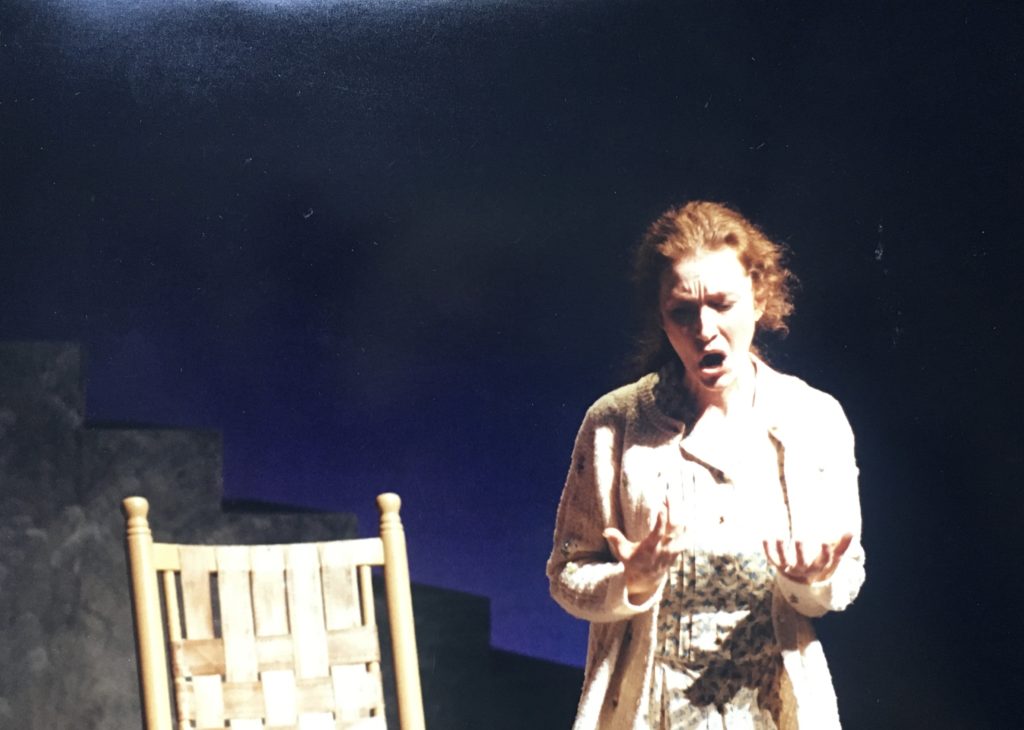
Billy and Zelda

For me, the music of the opera – song – is when the voice disconnects from the flow of the story and steps forward to speak directly to the audience.  It is an opening the heart to the moment. The act of singing has sacredness about it. Emerging from the depths of my body, warmed by my breath, it is when I utter my most intimate thoughts: truth telling, a moment of revelation, insight or growth – this is where I am right now.

And always in the beauty of words, a rich variety of poetic words. I work closely with my sister, to capture what is at hand. She creates poetry, not libretto or lyrics – an essence of things. 

As I compose, I taste each word, like small beautiful stones. I pour through the lines looking for understanding. I live days between words. I lose some of my composing assertiveness and melding my music to a phrase as if in service. Rarely do I go straight through the poem in song, rather, I circle back to a line, a set of delicious words, or hard consonants to punctuate meaning.

My characters are learners; they enter the opera without realizing they have questions about themselves and life. They are on a journey of illumination. 

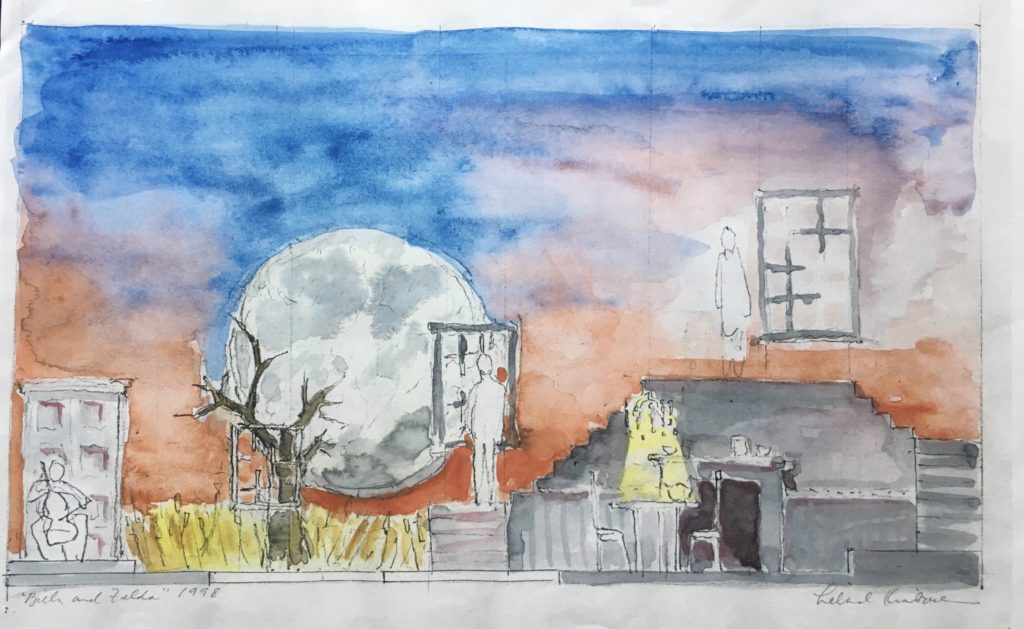
Set of Billy and Zelda

Billy and Zelda explores the mystery surrounding the deaths of two children. The work uses both opera and theater, intertwining contrasting stories about Billy, a young man killed in war, and Zelda, a little girl who has died of pneumonia.

But this is a ruse to talk about the rich life of relationships between parents and their children. The dead return to confront the living, the result of which is the love between them that endures through time as if it were yesterday.

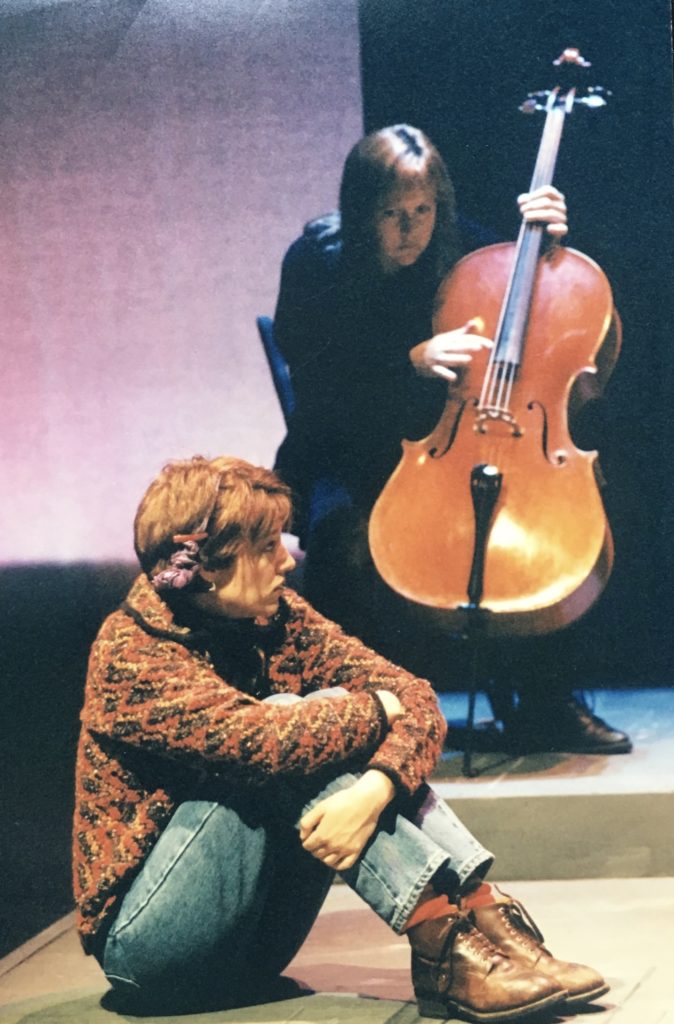
Zelda Narrator, Billy and Zelda

The overlay is the pregnant neighbor who comes to the opera almost by chance. Listen to here in the final song of Billy and Zelda, https://soundcloud.com/tina-davidson-3/core-lullaby-from-billy-and-zelda.

Standing alone at end of the last act, she addresses her new, learned awareness of life; there is no protection for her child-to-be, only a willingness to love – a love that knows no safety from loss.

And I have to ask, is Billy and Zelda the only opera whose main character is pregnant, and whose subject is the greatest love story of all – that with our children?

BILLY AND ZELDA

“Blue moon, over the curve of the horizon, the earth proves spherical beneath the crush of chain link stars,” Tina Davidson’s opera tells the story of two children lost in death and found by love. Based on the poetry by the composer sister, Eva Davidson and a short story by Lâle Davidson, and the work is a uniquely moving experience.

Billy and Zelda is a passionate, melodic work which explores the rich life of relationships between children and their parents. A truly innovative opera theater piece, one part is all theater (Zelda), while the other (Billy) all song, with the two plots winding in and out of each other. Zelda is for actress and improvised cello and Billy is for five singers, string quartet and marimba.

Excerpted from Grief’s Grace, A Memoir by Tina Davidson

LISTEN TO BILLY AND ZELDA: https://soundcloud.com/tina-davidson-3/billy-and-zelda-5-songs-compilation

Filed Under: Uncategorized Tagged With: chamber opera, melodic work, mothers and childern, opera, Tina Davidson

Let Me Play You My Song

January 1, 2020 by Tina Davidson

Young Composer Program

I have been hired to teach my Young Composer program to fifth graders in an inner-city elementary school in Philadelphia. The school is in an economically depressed section of town and many of the kids are at risk. The music program was cut from the school curriculum several years before, but I hope they might have some of the small hand-held percussion instruments. They show me to the closet. Inside is a dusty box with a few broken xylophones.

Looking around the classroom I see garbage cans, desks and chairs; we begin a drum circle. We walk around the room with chopsticks to find the best sound in the room. We catalogue all the sounds our body can make, teeth chattering, snorts, finger snaps, and thigh slaps. One of the boys turns red as he makes a rude noise.

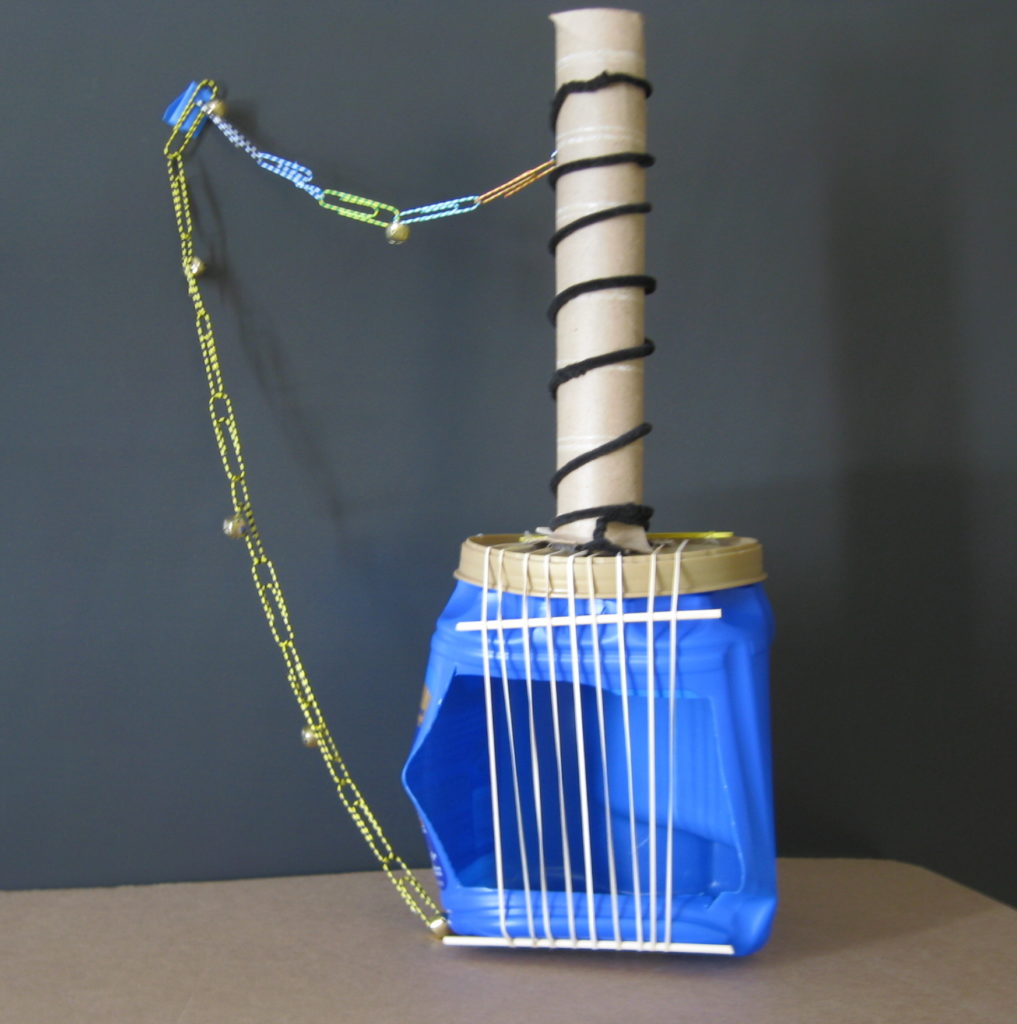
Guitar: coffee container, paper towel roll, rubber bands, paper clips

At the end of the class, I say, “Let’s make instruments!”  The kids are delighted.  “What do you have at home that you can bring in to make instruments?” I ask.

“Junk,” they yell back.

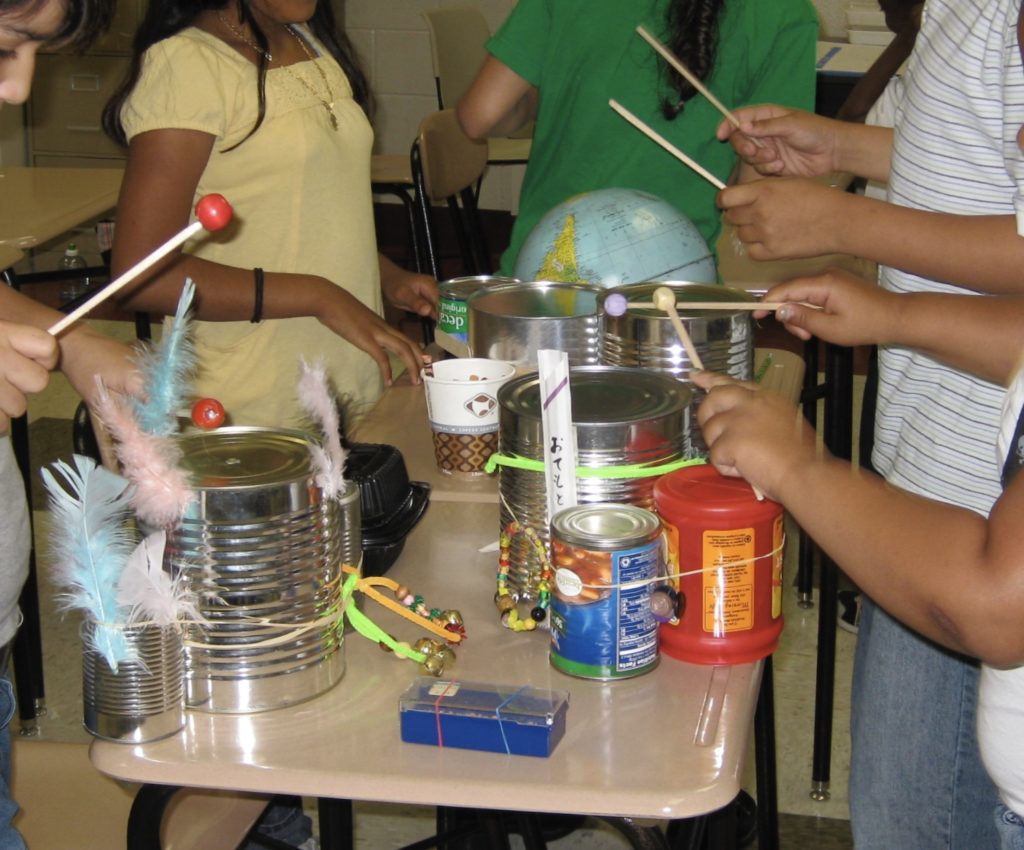
They bring what they have from their recycling bins – and a shoebox becomes a guitar, tin cans become drums, plastic soda bottles become shakers decorated with strings of beads.

Suddenly they can’t wait to write music.

Graphic Notation

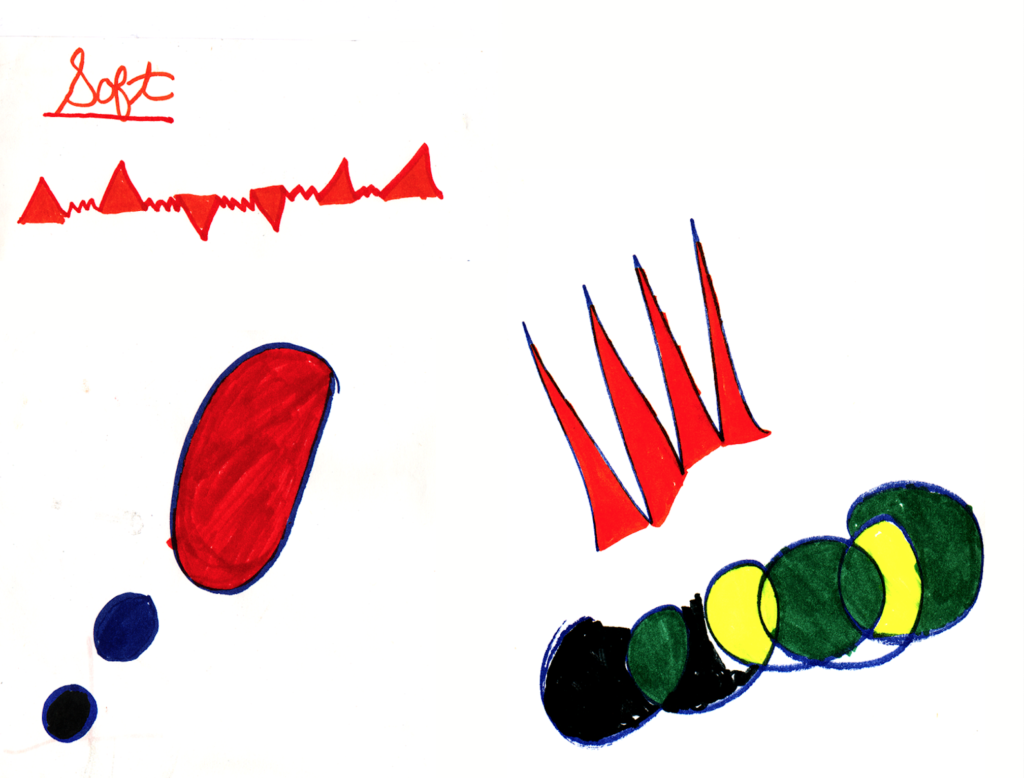
We begin with graphic notation – drawing the sound on large paper, where the shape and density of the mark indicates pitch. In groups of four, they write pieces based on a title, such as the ‘Haunted House’ or ‘The Pet Store.’ They invent notation by “drawing” the sounds they hear and then perform them with their hand- made instruments. 

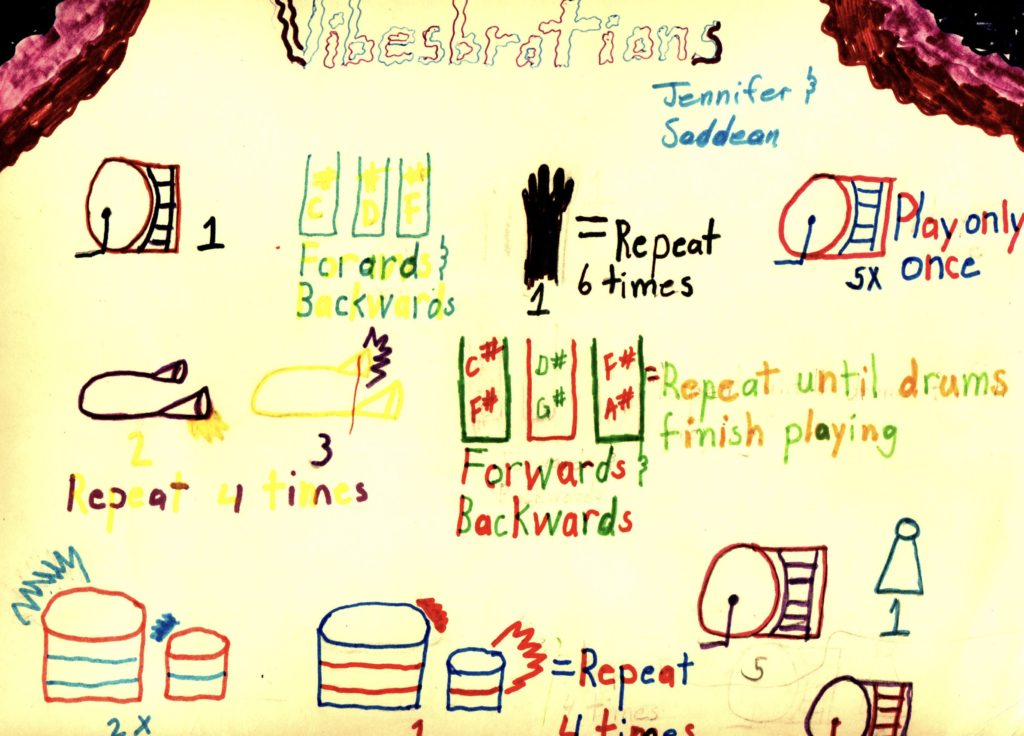
Vibrations, invented notation

Then, reducing the paper, they compose with invented notation – looking at how long a sound lasted (duration), and how the sound moved up and down (pitch). They write works for more traditional instruments in pairs or individually, inventing a more exact notation as they go along. 

And always as a gift – they write pieces to share in performance with others.

Performing together

The classroom is filled with sound. Children run back and forth conferring with each other. They rehearse and revise their pieces.

I am swarmed and surrounded. They press up at me, their faces bright.

“Ms. Tina,” they tug at me, “Let me play you my song!”

YOUNG COMPOSERS PROGRAM

Tina Davidson created Young Composers program to teach students to compose their own music through instrument building, graphic and invented notation. Designed to enhance self-esteem and reinforce achievement through alternative measures of expression, the course culminates with a performance of the students’ compositions.

Filed Under: Uncategorized Tagged With: art residencies, arts in public schools, kids writing music, music residencies, original compositions, students, Tina Davidson, young composer

  • « Go to Previous Page
  • Page 1
  • Interim pages omitted …
  • Page 6
  • Page 7
  • Page 8

Footer

  • Listen on Spotify
  • Listen on SoundCloud
  • About
  • Press
  • Works
  • Blog
  • Contact
Join The Mailing List

© 2026 Tina Davidson · Photos by Nora Stultz