• Skip to main content
  • Skip to footer

Tina Davidson

Composer

  • About
    • Biography
    • Community Engagement
  • Press
    • Press
    • Interviews & Podcasts
  • Works
    • Works
    • Listen
    • Recordings
    • Publications
  • Blog
  • Contact

thoughts about musical composition

Dancing with Dogs

August 9, 2025 by Nerissa

I open up the side porch, and sweep up all the winter dirt. The dogs and I sit in the sun, listening. Isabela, hopeful that she can magically transport herself next to the squirrel on the lawn, thrills an undertone growl and pants.

The earth is beginning to wake up. Daffodils bloom, and birds sing and sing. I am half hibernating between projects. A new piece soon?
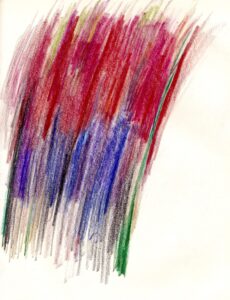
Trembling. This part of composing is always difficult; the hearing it into existence. Half of me is eager, the other half resistant – wanting to scale back, to sink back into bed, into books, into a life of teaching, and nothing more. My energy flags, my spirits gray out.


The book, In Other Words by Jhumpa Lahrir, is beautiful and rich. Her writing about the separation of self at an early age and the need to find home resonates deeply with me.

For her, it is in language. Caught between Bengali and English, she turns, as an adult, to Italian and begins to learn it without the comforts of a native tongue.

Delving deep into the language – now speaking, reading and writing in it, she becomes unchained from the desire for perfection. Her Italian will always be imperfect, and thus more free. “Imperfection inspires invention, imagination, creativity. It stimulates. The more I feel imperfect, the more I feel alive,” she says.
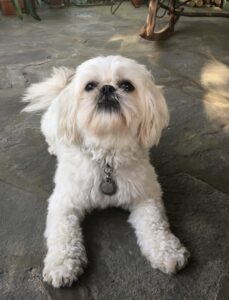
 

I danced with the dogs last night and ate sweet ripe oranges, fennel salad with tuna and avocado.

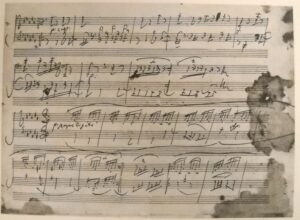
I worked on my new string trio, creating a fabric with sound – oscillations, repeated notes sliding upwards; a throbbing.


From concert to concert, I go, half drunk with sound. Poulenc’s choral work one night is followed by the Jasper Quartet’s performance of a work by Aaron Kernis. Then, the play “Still” at Julliard, and tomorrow, Piazzolla’s Cuatro Estaciones Porteñas.

I have become a glutton for moments that touch and move me forward in my understanding, thinking, and feeling. I am always looking for the meeting between deep investigation and spiritual presence.
Filed Under: Uncategorized Tagged With: dogs, process of composing, thoughts about musical composition, Tina Davidson

The Speed of Things

January 6, 2025 by Matt Brubacker

I am at a local concert, listening to a performance of Beethoven’s “Appassionata” Piano Sonata, No. 23. The pianist has impeccable clarity as he thunders through the tempestuous last movement. The speed of his playing, however, distracts me. What is it about the escalating speeds in performances of musical works?
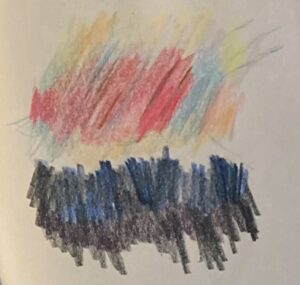
Everything is faster and faster these days. In fact, things have sped up so much that they say our brains have been reprogrammed. Being forced to use a rotary phone, taking 7 to 12 seconds to dial a number, would probably drive us crazy. Once adjusted to the current speed of our computer, slow loading of a program can be irritating, even anxiety provoking.

Physical prowess has also changed. Young athletes are bigger, faster and stronger, demonstrating a level of athleticism that was once considered beyond their years, due to a combination of better training techniques, technological advances, and specialized sports science. For example, in the 1980s and 1990s, few Olympic and professional sprinters could run a 100-meter dash in under 10 seconds. Since 2019, however, some high school athletes have been able to do so.

In other words, once a barrier is broken, it becomes a standard. A gifted athlete – or prodigy performer – creates a new marker of normal.

The classical music field reflect much of this increased speed. According to the 2018 Universal Music Group study, the recordings of Johann Sebastian Bach’s Double Violin Concerto have sped up by as much as 30% since 1961, with the 2016 recording lasting about 12 minutes compared to 17 minutes. Modern recordings, the study suggests, may be picking up the pace by about a minute per decade.

With escalating speed of performance comes an increase of technical abilities. I was up at the recent Tanglewood Contemporary Music Festival when Steve Mackey introduced his work, Physical Property.  In the mid 1990s, performers struggled to master his technically difficult work. Now, he laughed, the young performers, “Ate it up like whip cream.”

Last year, I was in rehearsals with the Jasper String Quartet and Natalie Zhu. We were preparing for the the recording of my latest album, Barefoot. The quartet were playing my difficult work beautifully; seamlessly moving through the tricky meter changes and the rambunctious middle section.

As the piece closed, we sat for a moment. “Wow,” I finally said, “You play fast!” I paused, “Can you take it slower?”

They smiled. Of course.

How fast, ultimately, can we listen, and what do we miss hearing because of speed? I love composing music that quickly twists and turns upward, or plunges downward. Hanging for a moment, breathless, it dashing off to another curve. Playing it too fast, however, flattens, even blurs the music. Sadly, we do not have instant playback to rehear, in the moment, and decipher the music that just rushed by us.

For my part, I say to my performers, slow down. Breathe. Allow the music to have more space.


Filed Under: Contemporary Music Tagged With: "Appassionata" Piano Sonata, Authentic self-expression, Beethoven, Jasper String Quartet, life getting faster, process of creating music, Speed of things, thoughts about musical composition, woman composer

Some Things I Have Learned, Part 2

August 1, 2024 by Tina Davidson

What I have learned about being a composer. What would I tell myself as a young composer? What would I share with others?  This section is about the business of being a composer.

BUSINESS, noun, 1. a person’s regular occupation, profession, or trade. 2. the practice of making one’s living by engaging in commerce.

Music is a business as well as an art form. My compositions are like children; having them is one thing, launching them into the world, another. This takes networking, using social media, learning how to represent myself, and finding others who will support and represent my work.

Break In.
If the front door is not open (because of race, gender, religion, education, or just being at the wrong place at the wrong time), break in through the back door or window. No matter how you get in, you are in.

Accept and build on small opportunities.
Compose music for anyone. Find ensembles in your community and compose for them. Have your work performed. Learn. Compose more. Better yet, start your own ensemble.

Remember your self worth.
Understand copyright, publishing, and recording rights – the ways your music can generate income. Have an attorney or someone in the business look at any contract before signing it.

Create your own working sabbatical.
When I started my career, I worked many jobs to support myself. Using the latte-principal (saving the $5 cost of a latte a day), I saved for ten years. When I got a commission from the Kronos Quartet, that and my savings allowed me to launch into being able to compose full time.

Develop a personal language to expresses your artistic process.
Over the years I learned to share my feelings and emotions that accompany composing music creating a deeper connection with the public at a human level.

Communicate about your work.
Taking the time to use all the tools to get the word out about your work is just part of being an artist. Learn how to write grants, find commissions, create consortiums and promote yourself.

It is about the relationship.
Creating a career as a composer is like fundraising – it is not about the money. Networking is key – going to concerts, introducing yourself, creating relationships, builds connection for future business or collaborations, etc.

Make ‘thank you’ a key part of your interaction with others.
I dedicate one day each week to say ‘thank you’ to anyone I have had contact with. Expressing appreciation is so important, even when rejected. And, by the way, at the rehearsal of your music, be awesome to the performers.

Advocate and join. 
Show up at concerts and conferences. Support other composers and musicians as colleagues and friends. Get involved with advocacy organizations! Speak out against ageism, sexism, cronyism where ever you see it.

Share your joy.
Communicate your love of the work with others. I find sharing rather than teaching, motivating rather than lecturing, including rather than talking to, brings others into the process on an equal standing.

Abundance rather that scarcity.
At the core of my artistic endeavor is a sense of abundance and possibility. There is always a new piece to compose, and a new opportunity to explore. And if I don’t hear or see one, I set out to sniff it out – using all the tools I have honed over the life time. There is always something more.


Filed Under: Contemporary Music Tagged With: Authentic self-expression, business of being a composer, creative process, creativity, thoughts about musical composition, Tina Davidson, woman composer, writing about music

Some Things I Have Learned, Part 1

July 12, 2024 by Nerissa

I was recently asked to come up with a lists of things I have learned about being a composer. What would I tell myself as a young composer? What would I share with others?

Three categories come to mind – how I nurture myself, what is part of my practice, and what is the business of being a composer. Over time, the list has grown, but at the root is always, always, safeguard your creativity and enrich yourself as a working artist.

Here is the first of two installments  – nurture and practice.

NURTURE, verb: to help (something or someone) to grow, develop, or succeed

Trust and value your own creativity.
Taking the time and patience to actively believe in myself as a creative person has been a life-time process. It has become a deep-self-knowing.

 Be with people who say yes.
If you have creative aspirations and your friends are not supporting you, find new friends. I am constantly grounded by friends who are generous, non-judgmental, and who see my work as just part of who I am.Feed the mind, body and soul. Embrace experience.
As an artist, I am what I eat – so reading and traveling are experiences that are directly channeled into my work. Eat pray love – life is the resource. I read, dance, take art lessons, and walk. Being a composer requires a multi-pronged approach.

Build community where ever you can.
Reaching out and being interested in other artist’s work has been a gold mine for me. I am not only inspired by what others of all disciplines are doing, but it feeds my work as well as puts it into perspective. Moreover, to have a community to share struggles, resources, and work is invaluable.

Dare to create yourself anew.
Heartbreak, failure, being sidelined – all of these are part of life. It is how I act upon them, manage them, learn from them, move through them and dare to try again, in a strengthened position, that matters.

PRACTICE, noun or verb: 1. the actual application or use of an idea, belief, or method, 2. to perform or work at repeatedly so as to become proficient

Talent depends on hard work – it demands it.
For me, there has never been an easy, quick path forward that doesn’t include time, discipline and work. The willingness to sit down and face what ever is in front of me, every day, most days, is essential.

Heave your heart into your mouth – often.
Composing is about authentically speaking about myself to others, not so that they understand me, but resonate with my music.

Learn that “no” is part of the artistic process.
When discouraged, I take comfort that even  successful artists get rejected. A life of artists’ endeavor is a process not a destination. I am in it for the long game and just keep going.

Journal every day.
Finding words to express my inner thoughts is part of my daily artistic practice. This allowed me to dig deeper into myself and my art. It is a place of asking myself questions – what is holding me back, what could I do better? Who are the inside voices that are giving me negative commentary?

Take a nap.
When blocked in my work, I take a walk, meditate or – my favorite, take a nap. My brain has an amazing ability to solve problems when left alone.

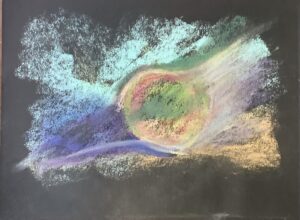
Late Summer Hydrangeas & Roses by Tina Davidson, pastel

Filed Under: Contemporary Music Tagged With: artists' work, composing music, creative process, nurturing and practice, thoughts about musical composition, Tina Davidson, woman composer, women in the arts, writing about music

Escaping Gravity

July 12, 2024 by Tina Davidson

I am counting again. It comes up now and then like a nervous tick. I notice it most when I am outside walking and preoccupied with some interior thought. Suddenly I hear the sound of my counting; how many steps to my front door, how many trees line the street or how many rows of grass to mow in a section of lawn. It’s embarrassing; an obsession that keeps me from experiencing what’s around me. I sternly forbid any more counting, abstaining like an alcoholic. Soon, however, I forget to be wary and I slip back into it again, this preoccupation with the count, the soul of music.

I have long been fascinated with rhythm in my music – how to shape the energy of a piece, like a band of shimmering movement. My interest is in how it transforms, moves from one state to another, interrupts itself, then doubles back. Sometimes it is a stream of water bouncing down a curling bed, glancing off rocks and edges. Other times is it a hot liquid metal, slithering, pulsating, spurting, angry, and insistent. Whether whimsical or full of power, it is the rhythms that often take a listener to a breaking point.

But I am getting ahead of myself. First, a bit of back ground on how I understand and relate to rhythm.

Music, for me, in its crudest form is three things: organized sound, duration and silence. Sound is the pitch (high and low). Duration has to do with time, both as the invisible net in which sound floats (how long the piece is), and the length of each individual sound, or rhythm. Silence is the great back drop and rarely intrusive. It acts as a foil to contents of music, bringing it into relief.

Rhythm is organized around a pulse, a steady continuous beat that hides in the background. The pulse can be fast or slow becoming the tempo or the speed of the music, but its primary role is to be the skeleton-form on which rhythm rests. For convenience, these pulses are corralled in countable units or measures, commonly 3, 4, 6 or 12. These keep the performers from flying out of place and loosing themselves completely.

The downbeat, for me, is the star of the measure. Its genesis, most likely, comes from walking. Stepping out to walk four steps, the dominate leg (usually the right leg) takes the lead, making a slightly firmer emphasis on the first step, and again on the third step. The first of these is the down beat, a natural emphasis of the measure.

Walking in groups of three is slightly different. The first group starts on the dominate leg (RLR), but the second grouping uses the nondominant leg (LRL). I almost stumble as I walk the pattern on my studio rug; the slight-off-centeredness catches my imagination.

I play with the magical insistence of downbeats. I am forever adjusting groupings of continuously running fast notes – like the sound of steady rain – not mathematically or intellectually, but in a playful, natural kind of movement.

This is where I begin. I am counting in a steady fast pace, let’s say 123 123 over and over. The first in the series is the downbeat that I feel as a little pulse. Then, wanting a change, I add them together, 123456 123456. Now the distance between downbeats is longer. Feeling a bit sassy, I put these groups together, 123 123 123456. Counting steadily, snapping my finger on each 1, I feel a lift in the last grouping, as if the 456 can’t keep their feet on the ground and are curling upwards.

There, right there is the magic – that lift, as if you were about to fly. The upward motion pulls at gravity. I am a kayak, rushing downstream only to hit a rock. As I fly in the air, the suspension seems longer than possible; my heart stops beating for a endlessly long moment – time is distorted.

In truth, this is the way I feel my own energy. Restless and seeking, I move from one slight change to another, but always in a context that makes sense, and has an inner logic or glue. As the pressure  heightens, I burst out into a calm, an arching melody of understanding perhaps. There is an interplay between the instruments, before I collect my wits about me, and dash on, back into the pulse of life.

This leads me to another question, what happens when my rhythms run out of energy? I imagine a marathon race where I am running and running. I am becoming more and more physically tired, although my pace has not changed. The moment when all my physical energy is depleted, I am unable to stand and fall towards the ground. In that vulnerable moment, I transform, and go upwards.

Isn’t it so in life? Significant change often happens when I stumble, or am so exhausted I can no longer resist. And then, the rhythm moves me upwards to what ever name I call it at the moment – God, higher power, the cosmos.  I escape gravity.

Filed Under: Contemporary Music Tagged With: Authentic self-expression, Classical contemporary music, composing music, duration, music by women, rhythm, thoughts about musical composition, Tina Davidson, woman composer, writing about music

  • Page 1
  • Page 2
  • Page 3
  • Go to Next Page »

Footer

  • Listen on Spotify
  • Listen on SoundCloud
  • About
  • Press
  • Works
  • Blog
  • Contact
Join The Mailing List

© 2026 Tina Davidson · Photos by Nora Stultz