• Skip to main content
  • Skip to footer

Tina Davidson

Composer

  • About
    • Biography
    • Community Engagement
  • Press
    • Press
    • Interviews & Podcasts
  • Works
    • Works
    • Listen
    • Recordings
    • Publications
  • Blog
  • Contact

process of creating music

The Box You Chose

August 9, 2025 by Tina Davidson

The truth is, I have never given up my pencil. With it in hand, I slip into the tactile world of music. I love the scratch of the point, sometimes breaking with a pop, the smooth finish of the staff paper, and the slide of the eraser. Sometimes, I lean in hard with feeling, pressing almost through the paper. Later, my fingers brush over the marks on the back side of the page, and as if reading them like a secret code.
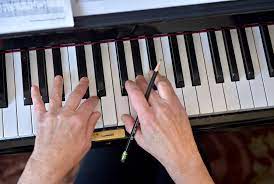
This sensitivity to touch comes from decades as a pianist; my fingertips can almost see at touch. The act of playing music on a piano is about bending the bones of my fingers – meeting music with my flesh – moving into and through to mold, bend, scoop it out of the ivories. This finger work, whether at the piano or grasping a pencil, sees and smells independently of myself.

But there is another reason I compose with pencil; the freedom it gives me to create. The page is a tabula rasa, open and waiting to be filled.

In my first draft, notes drift around, sometime clumping together or jumping lines. Page after page I scribble here and there, crossing out, or drawing arrows to another section. Pages waft to the floor or slide on top of the piano; a sea of notes. I am full of motion as I compose, using a kinetic energy that brings out a sweet solidity. I swear that my hand, moving up and down, over and across as I compose with pencil, wakes up a deeper something else. It moves me into the heart of things.

By the second draft, I have decided the order of the sections, and crafted each transition. Only when I have put the whole piece together in pencil do I turn to my computer, my typewriter.
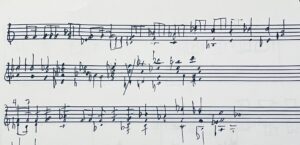
A music notation program, no matter how brilliant, is a box in which I fit my music. They are created based on classical music or even programmers’ ideas, and lag far behind living composers who challenge perceptions and create new ways of communicating music. It has to catch up to me, not the other way around.

If I am not careful, the limitation and inflexibilities of a software program can impact my composing process and even my thinking. Sneakily, it defaults to a notation I don’t want to use. Fortunately, I have already settled the argument with my pencil, so I insist. The program fights back, and we wrestle back and forth until I find a workaround, or use a prompt to override it.

I find it exhausting resisting this steady pull to the middle that is not my own. But with my score already rendered in pencil, I am fully armed and ready to push against the software and avoid the influence of its’ overbearing hand.


It is the first day of my composition class for the music majors at Franklin and Marshall College. I have just informed them that they are not allowed to use their computers for the first six weeks of the semester. A look of confusion flashes over their faces, then concern. “What do you mean?” asks one student, “We have to use a pencil? And compose music on staff paper?”

I smile. The start is an open field to explore.
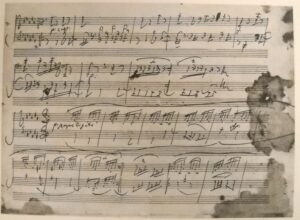
Filed Under: Contemporary Music Tagged With: Authentic self-expression, creative process, music by women, process of creating music, Tina Davidson

The Speed of Things

January 6, 2025 by Matt Brubacker

I am at a local concert, listening to a performance of Beethoven’s “Appassionata” Piano Sonata, No. 23. The pianist has impeccable clarity as he thunders through the tempestuous last movement. The speed of his playing, however, distracts me. What is it about the escalating speeds in performances of musical works?
Everything is faster and faster these days. In fact, things have sped up so much that they say our brains have been reprogrammed. Being forced to use a rotary phone, taking 7 to 12 seconds to dial a number, would probably drive us crazy. Once adjusted to the current speed of our computer, slow loading of a program can be irritating, even anxiety provoking.

Physical prowess has also changed. Young athletes are bigger, faster and stronger, demonstrating a level of athleticism that was once considered beyond their years, due to a combination of better training techniques, technological advances, and specialized sports science. For example, in the 1980s and 1990s, few Olympic and professional sprinters could run a 100-meter dash in under 10 seconds. Since 2019, however, some high school athletes have been able to do so.

In other words, once a barrier is broken, it becomes a standard. A gifted athlete – or prodigy performer – creates a new marker of normal.

The classical music field reflect much of this increased speed. According to the 2018 Universal Music Group study, the recordings of Johann Sebastian Bach’s Double Violin Concerto have sped up by as much as 30% since 1961, with the 2016 recording lasting about 12 minutes compared to 17 minutes. Modern recordings, the study suggests, may be picking up the pace by about a minute per decade.

With escalating speed of performance comes an increase of technical abilities. I was up at the recent Tanglewood Contemporary Music Festival when Steve Mackey introduced his work, Physical Property.  In the mid 1990s, performers struggled to master his technically difficult work. Now, he laughed, the young performers, “Ate it up like whip cream.”

Last year, I was in rehearsals with the Jasper String Quartet and Natalie Zhu. We were preparing for the the recording of my latest album, Barefoot. The quartet were playing my difficult work beautifully; seamlessly moving through the tricky meter changes and the rambunctious middle section.
As the piece closed, we sat for a moment. “Wow,” I finally said, “You play fast!” I paused, “Can you take it slower?”

They smiled. Of course.

How fast, ultimately, can we listen, and what do we miss hearing because of speed? I love composing music that quickly twists and turns upward, or plunges downward. Hanging for a moment, breathless, it dashing off to another curve. Playing it too fast, however, flattens, even blurs the music. Sadly, we do not have instant playback to rehear, in the moment, and decipher the music that just rushed by us.

For my part, I say to my performers, slow down. Breathe. Allow the music to have more space.


Filed Under: Contemporary Music Tagged With: "Appassionata" Piano Sonata, Authentic self-expression, Beethoven, Jasper String Quartet, life getting faster, process of creating music, Speed of things, thoughts about musical composition, woman composer

Deep Listening

September 12, 2022 by Tina Davidson

Pauline Oliveros and James Tenney

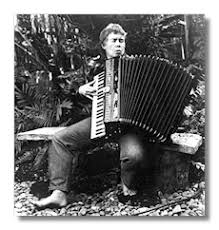
Pauline Oliveros playing the accordianA few days up at the Charles Ives Center for the Performing Arts gives me relief. I am in residence with musician, composer, and maverick Pauline Oliveros. “Hear, remember, and imagine,” she intones. You hear a sound, remember it, and then imagine it again. She uses words to form her music, bringing the performers into the process of creation. Her work begets community.
I am struck by music’s linear process, where duration is the great ingredient. Unlike visual art, music cannot be experienced all at once. Instead, it moves though time. As we listen, we construct the whole in our mind through memory. Like a transparent ghost, music moves our hearts with its lack of tangible substance.

∗∗∗∗

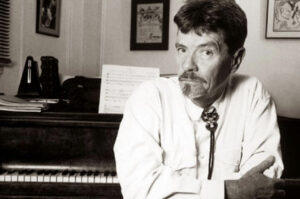
I heard a piece by composer Jim Tenney recently at a concert. Something interests me. HisComposer James Tenney piece is a voyage of technical manipulations involving tape delay and difference tones – those haunting resonances that appear when certain pitches rub against each other.
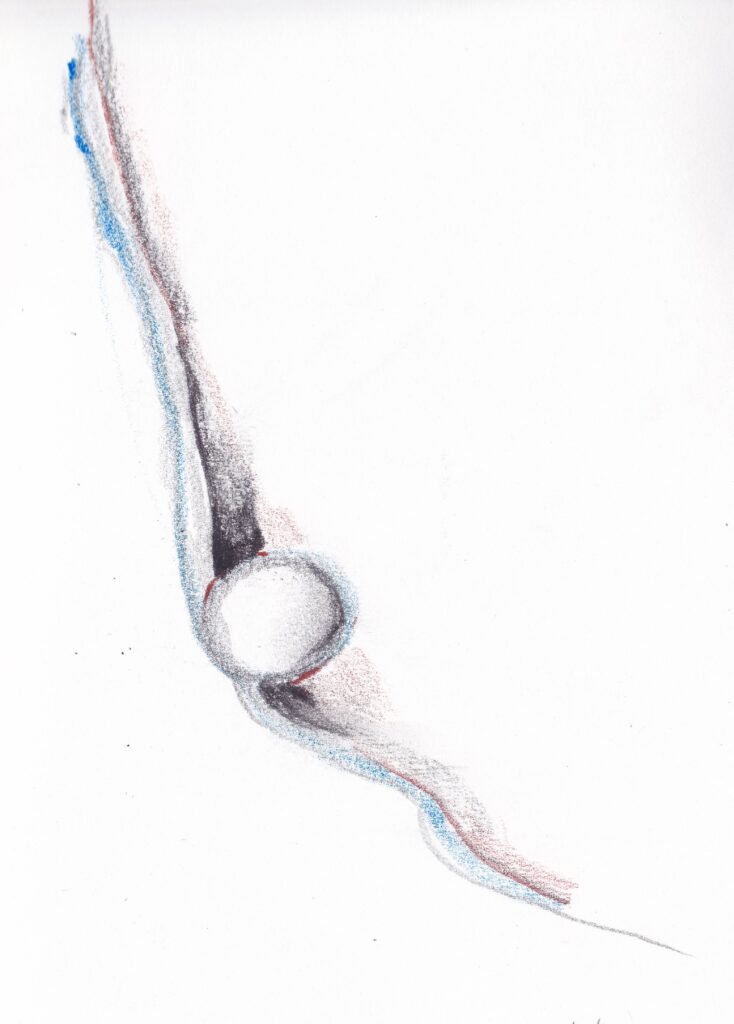
At first I am rapt. But, I cannot hold on, my mind disengages and falls into a dark quiet. After eight to ten minutes, the piece suddenly opens up, and I catch onto the piece again. How did I get here – where have I been? As if a white shirt, shown in meticulous technical detail, suddenly blossoms with blood, both a terrifying signal of death, and an affirmation of life.

The shape of his music reminds me of my own shape. While the content of our work is different, the linear shape and flow, moving from one point to (and through) another, is similar. He uses a one-theme-one-idea approach, where the starkness and persistence engages the listener. I am episodic, darting though material with single-minded purpose. His music is a straight line, mine moves in and over. He takes a fragment and expands it. I sew my fragments together, so one becomes another becomes one. His overall shape is like the stem of a flower, long and thin with a sudden bloom at the end. My shape is conical; the whole piece expands from a beginning point and opens up to an ecstasy. His epiphany is sharply beautiful in relief to his material. Mine is joyous and circular.


Excerpted from Let Your Heart Be Broken, Life and Music from a Classical Composer  by Tina Davidson.  © Tina Davidson, 2022

Listen: Wēpan for string quartet and piano, was written at the request of the Open End Ensemble. From the old English, wēpan means to weep, bewail, mourn over, or deplore.

I have written about Pauline Oliveros (1932-2016) before and I suspect I will write about her again. She is one of the great American composers, investigating new ways to focus attention on music including her concepts of “deep listening” and “sonic awareness.”

Jim Tenney (1935-2006), a pioneer of computer music, was interested in the possibilities offered by pure tuning. I met him in the mid-1980s and was drawn to him  as a fellow graduate from  Bennington College, and to his warmth, kindness and curiosity.


Filed Under: Uncategorized Tagged With: creative process, creativity, original compositions, process of composing, process of creating music, thoughts about musical composition, Tina Davidson, women composers, women in the arts

Have Your Babies Or Tie Your Tubes

March 7, 2022 by Tina Davidson

She steps close to me, and almost whispers, “Can you have children and still have a career in music?”

Attractive and young, she is a successful composer, already teaching at a prestigious university, and married to an older, well-known composer. They are talking about having children, but she is not sure. I smile.

I can only speak for myself. Having my daughter opened me up in a way that I never could have imagined. Through her I found the courage to face my dark self which has allowed me to speak true in my music. She awoke in me the possibility of love given and love reciprocated, and connected me to lingering soft animal embraces and the wonder of discovering the world anew. It was a second chance of unknown dimension.

And yet, time was now not my own. As a mostly single parent, I crafted careful structures for childcare, combinations of daycare and babysitters, which, at any moment could fall through – an illness, an early dismissal, a snow day – all was in shatters and I was frantic.  I’d sneak into my studio when she was playing or napping, feeling the weight of my continual distraction. She learned, implicitly, that even when I was with her, I was not always present. My gaze far off, I would put her voice on mute as I tended my evolving work, moving energy around in my thoughts.

“There is a passionate case to be made on either side, having your children or doing without, and both sides are for humanity,” says Alix Kates Shulman, in her book, Burning Questions. “Have your babies or tie your tubes – whatever you decide, you’ll find out soon enough that you’ve lost something precious.”


Excerpted from Let Your Heart Be Broken, Life and Music from a Classical Composer  © Tina Davidson, 2022.

Listen to Core of the Earth, and Lullaby, from Tina Davidson’s opera, Billy and Zelda


Filed Under: Uncategorized Tagged With: composing music, Griefs Grace, process of creating music, Tina Davidson, women artists and children, women composers, writing about music

The Dance is On

December 1, 2021 by Tina Davidson

Composing and daily life

The day is cold, and snow-blown. The sun shines clear on the stark, naked trees. The house is bright with reflection. I could be resting, inside, warm from the white, frosty day, instead I am disconnected.

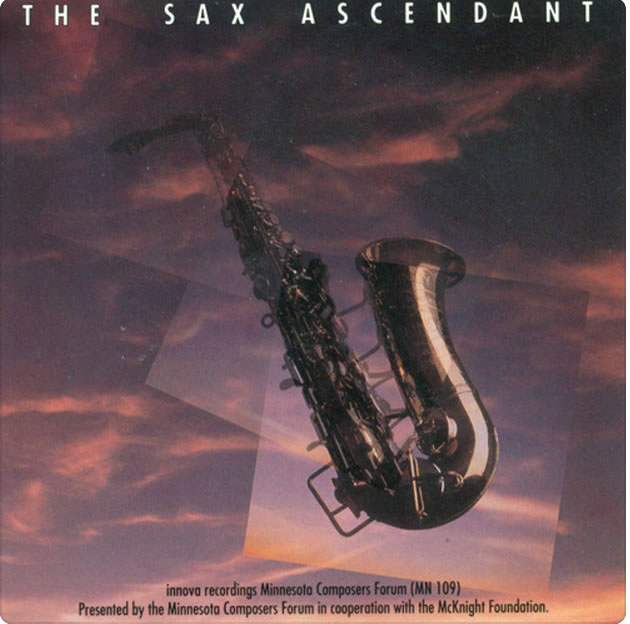
The time nears to begin my new composition for saxophone. I am restless and irritable. I pace and growl, find other things to do, and waste time. I want to move forward and to stay back at the same time.

Of course! My old friend, procrastination. For years I fought against him, as he sniffs around my house. Now I concede. Procrastination has transformed from the art of avoiding my work into that nebulous space of beginning – I am on my way, the dance is on.

from music journal by Tina Davidson

At first, I only have an impression of the piece, its general size and weight, as if I were holding an invisible oval shape in my hands. I can only feel the smoothness of the outside shell. Gradually, I start to hear the edges, like an egg hissing in a frying pan, the whites gradually crisping under the heat, gaining definition.

I begin to write the material for the piece. Quickly, notes scatter over the page, a short hand of sorts. I am interested in the journey, the relationship between where I am and where I am going. I map out the whole piece before I start to score it.

There is a beauty about this process. Sometimes I am so deep into the work that daily life is not a conscious act. Instead, it revolves around me on its own, as if it knows what to do without my directions. It is something else, it has a pulse and a rhythm of its own, color and speed. My work is silent, far away, full of itself and only itself. It has my total attention. I am rapt and inert, and at times rapturous. Then life tugs at me, like a suture on the skin. I leave reluctantly; this will await me tomorrow when I take up the pencil again.

But there is a dark side as well. Often the music I am composing has a mind of its own.  When I am unhappy with the direction of the piece, I erase measures. Later I notice that the deleted section has wormed its way back in without my noticing. Try as I might, the direction has been set and unmovable. 

After an intense day of work, I wake several times a night hearing my music, or watch it slowly, scrutinizing every moment. My mind is like a computer; I am forced to watch the notes twist and turn. My privacy is invaded and music blares in my ear, possessing me. I roll over in bed, “Get back to the studio where you belong,” I mutter.

In the worst moments, I am resentful of my music. It soars, breathes, moves on its journey. I am the servant. I sit, quietly, studiously and patiently pressing the small black and white notes on a staff paper. Hours away from friends and family.  I have a fleeting fantasy, a secret fear; I will turn into music, this vehicle for sound. Music will overtake me, fill my pores, and submerge me. I will wake up one morning scaled and encrusted like an ancient desert creature, a reptile with congealed flesh. A watcher.


Excerpted from Let Your Heart Be Broken, Life and Music from a Classical Composer  © Tina Davidson, 2022.

Listen: Transparent Victims for soprano, alto and pre-recorded saxophones (soprano, alto, tenor and baritone)

https://www.youtube.com/watch?v=uLE-HbmLOPg


Filed Under: Uncategorized Tagged With: Dance, Griefs Grace, music journal, process of creating music, procratination, saxophone, Tina Davidson

Footer

  • Listen on Spotify
  • Listen on SoundCloud
  • About
  • Press
  • Works
  • Blog
  • Contact
Join The Mailing List

© 2026 Tina Davidson · Photos by Nora Stultz