• Skip to main content
  • Skip to footer

Tina Davidson

Composer

  • About
    • Biography
    • Community Engagement
  • Press
    • Press
    • Interviews & Podcasts
  • Works
    • Works
    • Listen
    • Recordings
    • Publications
  • Blog
  • Contact

process of composing

Deep Listening

September 12, 2022 by Tina Davidson

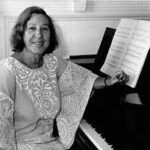
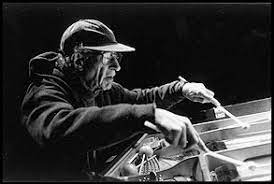
Pauline Oliveros and James Tenney
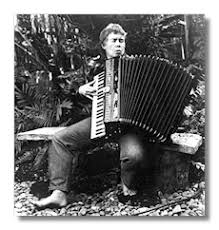
Pauline Oliveros playing the accordianA few days up at the Charles Ives Center for the Performing Arts gives me relief. I am in residence with musician, composer, and maverick Pauline Oliveros. “Hear, remember, and imagine,” she intones. You hear a sound, remember it, and then imagine it again. She uses words to form her music, bringing the performers into the process of creation. Her work begets community.

I am struck by music’s linear process, where duration is the great ingredient. Unlike visual art, music cannot be experienced all at once. Instead, it moves though time. As we listen, we construct the whole in our mind through memory. Like a transparent ghost, music moves our hearts with its lack of tangible substance.

∗∗∗∗

I heard a piece by composer Jim Tenney recently at a concert. Something interests me. HisComposer James Tenney piece is a voyage of technical manipulations involving tape delay and difference tones – those haunting resonances that appear when certain pitches rub against each other.
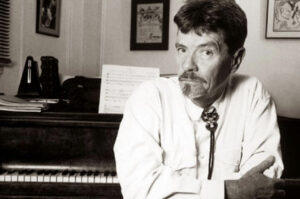
At first I am rapt. But, I cannot hold on, my mind disengages and falls into a dark quiet. After eight to ten minutes, the piece suddenly opens up, and I catch onto the piece again. How did I get here – where have I been? As if a white shirt, shown in meticulous technical detail, suddenly blossoms with blood, both a terrifying signal of death, and an affirmation of life.

The shape of his music reminds me of my own shape. While the content of our work is different, the linear shape and flow, moving from one point to (and through) another, is similar. He uses a one-theme-one-idea approach, where the starkness and persistence engages the listener. I am episodic, darting though material with single-minded purpose. His music is a straight line, mine moves in and over. He takes a fragment and expands it. I sew my fragments together, so one becomes another becomes one. His overall shape is like the stem of a flower, long and thin with a sudden bloom at the end. My shape is conical; the whole piece expands from a beginning point and opens up to an ecstasy. His epiphany is sharply beautiful in relief to his material. Mine is joyous and circular.


Excerpted from Let Your Heart Be Broken, Life and Music from a Classical Composer  by Tina Davidson.  © Tina Davidson, 2022

Listen: Wēpan for string quartet and piano, was written at the request of the Open End Ensemble. From the old English, wēpan means to weep, bewail, mourn over, or deplore.

I have written about Pauline Oliveros (1932-2016) before and I suspect I will write about her again. She is one of the great American composers, investigating new ways to focus attention on music including her concepts of “deep listening” and “sonic awareness.”

Jim Tenney (1935-2006), a pioneer of computer music, was interested in the possibilities offered by pure tuning. I met him in the mid-1980s and was drawn to him  as a fellow graduate from  Bennington College, and to his warmth, kindness and curiosity.
 

Filed Under: Uncategorized Tagged With: creative process, creativity, original compositions, process of composing, process of creating music, thoughts about musical composition, Tina Davidson, women composers, women in the arts

Measurable Outcomes

June 5, 2022 by Tina Davidson

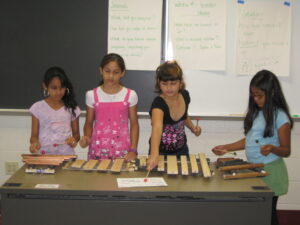
Children playing on homemade instrumentsMy three-year residency in Delaware is winding down. We sit in meetings and talk about outcomes or measurable results of my work in community settings.
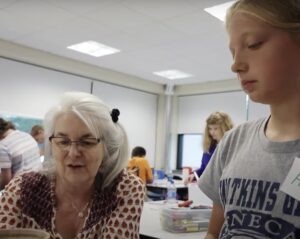
Do my students get better grades? Are the women who are homeless more successful after working with me? Or, at the very least, have we created new audiences for the arts?

These are reasonable questions. If one puts in the effort and money, shouldn’t there be tangible, visible results?

I shake my head. It is really none of my business.

I teach because I believe the power of creativity is in all of us, just unrecognized. I teachteaching because I trust it will take root in some strange and unimagined way, in its own time. I teach as an act of faith; a spiritual practice. I get up every day, and do it. “Here,” I say, “this is what I have for you today.”
I find no master-strokes or large, efficient gestures. Only this one-on-one, slow work that brings others into a meaningful connection to the arts – hopefully. A commitment to work close to the ground.


Excerpted from Let Your Heart Be Broken, Life and Music from a Classical Composer  © Tina Davidson, 2022.

Listen: Paper, String, Glass & Wood excerpt, written for professional string quartet and students quartets


Filed Under: Uncategorized Tagged With: art residencies, arts in public schools, composing music, creative process, melodic work, music by women, music residencies, process of composing, Tina Davidson, women composers

How Will I Know When to Stop?

May 2, 2022 by Tina Davidson

Timothy stands close to me. When I move, he moves. He waits for me to play his piece with him and follows me like a shadow around the room.
I help Shante with her instrument, calm Ferron down so he can concentrate, and get sidelined by Brandi and Terrell. They work on a piece for two desks and their hands. Experimenting with fingers, palms, and fists, they make sounds on the wooden tops. I step back and almost fall over Timothy; he is patient.

Jake and Michael struggle with their invented notation. Jake’s faces contorts, he cannot figure out how to write his rhythm down. We put words to the melody, and suddenly he claps it with ease.

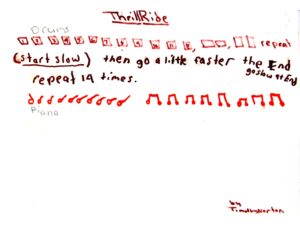
Timothy pushes me towards the piano and I grab a drum. His piece, Thrill Ride, is carefully notated in tiny print. Only he knows what it means, but he has taught me. He begins to play, his long fingers curving around the complicated chords. A dreamy look comes over his face.

“How will I know when to stop?” I press him. He continues to play, immersed in his own sound world. (McMichael Elementary School)

∗∗∗∗∗

Michael’s eyes are full of tears. His small body slumps in the chair. “It’s not fair! I want to work with the cellist.” Tears splash down his face. I study him for a moment, then settle down beside him.

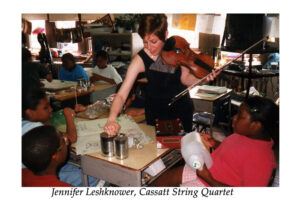
Michael and two other boys were out of the room recording the rap lyrics to the song the fifth grade class had written. During their absence, the rest of the class completed their graphically notated pieces about Homer’s Odyssey. Today, the Cassatt String Quartet joins my residency. Each group will collaborate with a member of the ensemble. The three boys have no composition. I stall, thinking.
“What if you write a new piece for all of the string players right now?” I suggest. Michael runs for the markers and newsprint. Working quickly, the boys write a piece they call Rough Riders from Lotus Town. They fight briefly about how to notate the motorcycle sound.

After a discussion, the Quartet plays the piece for the class. Michael leans into me, smiling. “They played my piece pretty good!” he concedes.  (Nebinger Elementary School)


Excerpted from Let Your Heart Be Broken, Life and Music from a Classical Composer  © Tina Davidson, 2022.

Listen:  Celestial Turnings, string orchestra: excerpt


Tina Davidson created Young Composers program to teach students to compose their own music through instrument building, graphic and invented notation. Designed to enhance self-esteem and reinforce achievement through alternative measures of expression, the course culminates with a performance of the students’ compositions.

Filed Under: Uncategorized Tagged With: arts in public schools, Cassatt Quartet, creating music, creative process, music residencies, original compositions, process of composing, students composing, Tina Davidson, women composers

Learn to be Embarrassed

April 4, 2022 by Tina Davidson

By the time I arrived at Bennington College in 1972, I had never written a note of music. In fact, I had never played or heard any music by women composers. It never occurred to me that women could compose.

composer Vivian Fine
Vivian Fine

The music department boasted of four composers on their faculty – Louis Calabro, Vivian Fine, Lionel Nowak and Henry Brant. They believed that all performers should be composers, and all composers performers. Moreover, they eschewed the academic approach to composition that prescribed years of study of harmony and theory before you touched pencil to paper. They saw no need to waste precious class time with something you could teach yourself, and preferred to teach composition by allowing their students to write music and learn from the performance of it.

My freshman music class was taught by Lou Calabro, a loose-limbed man with slight stoop and a strong New York accent.  He was quick to give us our first assignment, to write a duet for two of our classmates. There was little instruction on how to compose. Staff paper was handed out.

I was distinctly grumpy, and muttered something about how all good music had already been written and all good composers were dead. But I wrote a piece for oboe and French horn. Twelve measures.

The piece was terrible, and the instrumentalists complained bitterly about the scattered notation and lack of dynamics. I vowed never to write for that combination again. But I was interested, and continued composing for my classmates.

By the end of my first semester, I was hooked. I knew what I wanted to do in life. It was as if, looking out into the forest, I could see many different paths, but only one was illuminated. More than that, I wanted to know who I was, and composing music was a way of finding out, without revealing too much. It was a place of investigation and almost complete anonymity.

composer Henry Brant
Henry Brant

The years at Bennington passed quickly. Tuesday afternoons the entire music department gathered and played all the music composed that week. Wednesday night was the weekly concert. I studied with witty and generous Vivian Fine, a former student of Ruth Crawford Seeger, and with iconoclast Henry Brant, famous for his acoustic spatial music. He was small, brown and never without cap or sunshade on his head. Because he was opinionated and sometimes difficult to study with, I asked him to be my advisor and surreptitiously brought him my scores to look at. His rules for orchestration were brilliant; I still review his notes carefully before I begin a new orchestra piece.

As composing became my voice, piano was my anchor. My teacher, Lionel Nowak, listened intently, eyes closed, as I played. “Get into the piano keys, like clay,” he would say, lifting up his head and waving one hand. “Dig deep into them – don’t be afraid, don’t back away from anything.”

composer Lionel Nowak
Lionel Nowak

“Courage!” He sat rumpled in the chair, his right index finger raised, “You must always dare to make a fool of yourself, and then you’ll be able to do things you never dreamed you could.”

He shrugged his shoulders, “Learn to be embarrassed.”

Bennington College was, in the end, seminal in my development as a musician and composer. The faculty did not teach me how to write music, instead they invited me in joyfully and with generosity. They fostered inclusion – everyone was worthy of this particular creative process, from bright-eyed beginners to sullen veterans. They believed learning was doing, again and again.

They taught me the difference between criticism and critical thinking. The former takes a stance of superiority, the latter is respectful and self-questioning – what works or doesn’t, and how can I do better next time. They were at the heart of artistic endeavour – bold, generous, humorous, and supportive. They taught me as a fellow composer, one of their tribe.


Excerpted from Let Your Heart Be Broken, Life and Music from a Classical Composer  © Tina Davidson, 2022.

Listen: Render, for string quartet was commissioned for the Cassatt String Quartet

https://soundcloud.com/tina-davidson-3/render-2016-for-string-quartet-excerpt-2?si=2ce244ae90d64934bb8f9c02dff17e96&utm_source=clipboard&utm_medium=text&utm_campaign=social_sharing

Filed Under: Uncategorized Tagged With: composing music, creative process, creativity, original compositions, process of composing, thoughts about musical composition, Tina Davidson, women in the arts, writing about music

Random Thoughts, #4

November 1, 2021 by Tina Davidson

from my music journal

October 3

A great day. I can hear. And I am dreaming again. The dreams are busy, as if they were leading my daily life for me while I concentrate on the symbol. My dreams wash dishes, tend the garden, and pay bills. I sleep well, though my stomach is still tender.

I came in and immediately worked out several sections, streamlining the shape of the piece, reducing it to two sections. I get to the point right away. The old sense of balance and confidence returns. The end of the piece is already written, and I am anxious to compose towards it.

Most difficult is to wait until my unconscious offers up the music to my conscious. A patient waiting, an eternal sense of trust, and then suddenly, clarity.

July 10

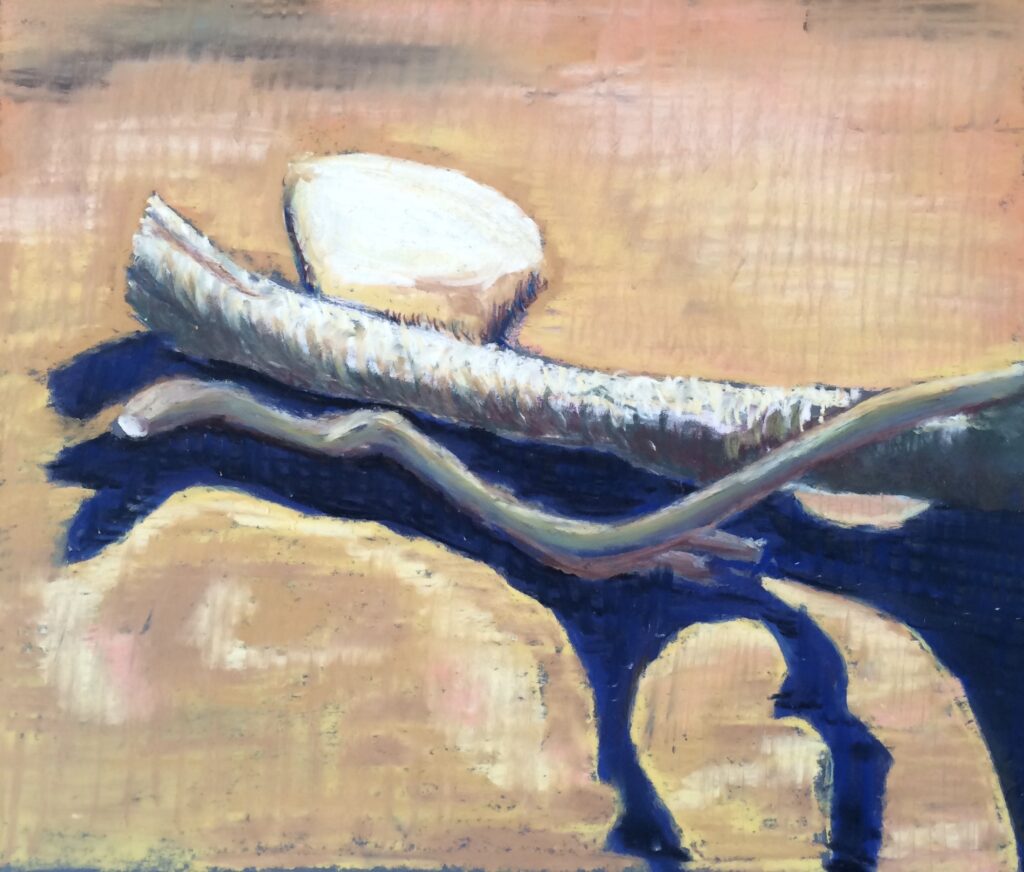
Monday morning. The magnolia tree is dying by degrees. The slender grey branches cross over each other at the base, this year the leaves are small and pale. Overcast day, foolish thoughts. Where do I place grief?


pastel by Tina Davidson

September 1

My music often springs from an idea first formulated in words. The titles come well before the music itself and are, to some extent, my map of the world, guiding me as I compose. They are metaphors or secret encoded meanings for my pieces that I understand, do not understand, and come to understand. Dark Child Sings, for example, is my dark child singing out his life, with growing ecstasy and passion, of sexual beginnings, of calm lullabies and of strong chants.

I have a love affair with the poetry of words. Strung together, they are both important and not, mysterious and clear. Occasionally, words stand in the way of my music, speaking louder than the piece itself, because I simply do not know yet. I cannot dig beyond the phrase.

Music is never just passion or reason, instead a delicate balance between opposites that need the other to exist. Without one there are neither. Reason, brittle and devoid of passion, can be a monster of blindness and self-service. And passion, without reason, is bloated and ridiculous.


Excerpted from Let Your Heart Be Broken, Life and Music from a Classical Composer  © Tina Davidson, 2022.

Listen: It is My Heart Singing, for string quartet:

https://www.youtube.com/watch?v=UYpKICTyO9c

It is My Heart Singing, music by Tina Davidson, Albany Records, TROY842, 2006

Performed by the Cassatt Quartet (Muneko Otani, Jennifer Leshnower, Tawnya Popoff, Nicole Johnson), Stephen Manes and Caroline Stinson

Purchase: https://www.amazon.com/My-Heart-Singing-Tina-Davidson/dp/B000FO443K

Filed Under: Uncategorized Tagged With: Cassatt Quartet, It is my Heart Singing, music journal, process of composing, Tina Davidson

  • « Go to Previous Page
  • Page 1
  • Page 2
  • Page 3

Footer

  • Listen on Spotify
  • Listen on SoundCloud
  • About
  • Press
  • Works
  • Blog
  • Contact
Join The Mailing List

© 2026 Tina Davidson · Photos by Nora Stultz