• Skip to main content
  • Skip to footer

Tina Davidson

Composer

  • About
    • Biography
    • Community Engagement
  • Press
    • Press
    • Interviews & Podcasts
  • Works
    • Works
    • Listen
    • Recordings
    • Publications
  • Blog
  • Contact

creative process

How Will I Know When to Stop?

May 2, 2022 by Tina Davidson

Timothy stands close to me. When I move, he moves. He waits for me to play his piece with him and follows me like a shadow around the room.

I help Shante with her instrument, calm Ferron down so he can concentrate, and get sidelined by Brandi and Terrell. They work on a piece for two desks and their hands. Experimenting with fingers, palms, and fists, they make sounds on the wooden tops. I step back and almost fall over Timothy; he is patient.

Jake and Michael struggle with their invented notation. Jake’s faces contorts, he cannot figure out how to write his rhythm down. We put words to the melody, and suddenly he claps it with ease.

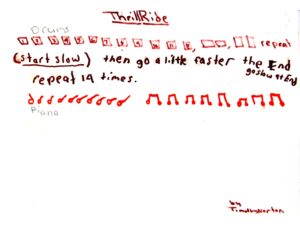
Timothy pushes me towards the piano and I grab a drum. His piece, Thrill Ride, is carefully notated in tiny print. Only he knows what it means, but he has taught me. He begins to play, his long fingers curving around the complicated chords. A dreamy look comes over his face.

“How will I know when to stop?” I press him. He continues to play, immersed in his own sound world. (McMichael Elementary School)

∗∗∗∗∗

Michael’s eyes are full of tears. His small body slumps in the chair. “It’s not fair! I want to work with the cellist.” Tears splash down his face. I study him for a moment, then settle down beside him.

Michael and two other boys were out of the room recording the rap lyrics to the song the fifth grade class had written. During their absence, the rest of the class completed their graphically notated pieces about Homer’s Odyssey. Today, the Cassatt String Quartet joins my residency. Each group will collaborate with a member of the ensemble. The three boys have no composition. I stall, thinking.
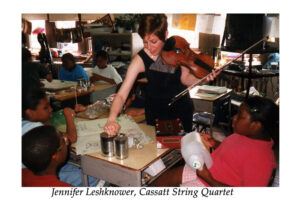
“What if you write a new piece for all of the string players right now?” I suggest. Michael runs for the markers and newsprint. Working quickly, the boys write a piece they call Rough Riders from Lotus Town. They fight briefly about how to notate the motorcycle sound.

After a discussion, the Quartet plays the piece for the class. Michael leans into me, smiling. “They played my piece pretty good!” he concedes.  (Nebinger Elementary School)


Excerpted from Let Your Heart Be Broken, Life and Music from a Classical Composer  © Tina Davidson, 2022.

Listen:  Celestial Turnings, string orchestra: excerpt


Tina Davidson created Young Composers program to teach students to compose their own music through instrument building, graphic and invented notation. Designed to enhance self-esteem and reinforce achievement through alternative measures of expression, the course culminates with a performance of the students’ compositions.

Filed Under: Uncategorized Tagged With: arts in public schools, Cassatt Quartet, creating music, creative process, music residencies, original compositions, process of composing, students composing, Tina Davidson, women composers

Learn to be Embarrassed

April 4, 2022 by Tina Davidson

By the time I arrived at Bennington College in 1972, I had never written a note of music. In fact, I had never played or heard any music by women composers. It never occurred to me that women could compose.

composer Vivian Fine
Vivian Fine

The music department boasted of four composers on their faculty – Louis Calabro, Vivian Fine, Lionel Nowak and Henry Brant. They believed that all performers should be composers, and all composers performers. Moreover, they eschewed the academic approach to composition that prescribed years of study of harmony and theory before you touched pencil to paper. They saw no need to waste precious class time with something you could teach yourself, and preferred to teach composition by allowing their students to write music and learn from the performance of it.

My freshman music class was taught by Lou Calabro, a loose-limbed man with slight stoop and a strong New York accent.  He was quick to give us our first assignment, to write a duet for two of our classmates. There was little instruction on how to compose. Staff paper was handed out.

I was distinctly grumpy, and muttered something about how all good music had already been written and all good composers were dead. But I wrote a piece for oboe and French horn. Twelve measures.

The piece was terrible, and the instrumentalists complained bitterly about the scattered notation and lack of dynamics. I vowed never to write for that combination again. But I was interested, and continued composing for my classmates.

By the end of my first semester, I was hooked. I knew what I wanted to do in life. It was as if, looking out into the forest, I could see many different paths, but only one was illuminated. More than that, I wanted to know who I was, and composing music was a way of finding out, without revealing too much. It was a place of investigation and almost complete anonymity.

composer Henry Brant
Henry Brant

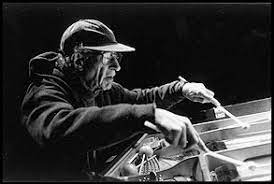
The years at Bennington passed quickly. Tuesday afternoons the entire music department gathered and played all the music composed that week. Wednesday night was the weekly concert. I studied with witty and generous Vivian Fine, a former student of Ruth Crawford Seeger, and with iconoclast Henry Brant, famous for his acoustic spatial music. He was small, brown and never without cap or sunshade on his head. Because he was opinionated and sometimes difficult to study with, I asked him to be my advisor and surreptitiously brought him my scores to look at. His rules for orchestration were brilliant; I still review his notes carefully before I begin a new orchestra piece.

As composing became my voice, piano was my anchor. My teacher, Lionel Nowak, listened intently, eyes closed, as I played. “Get into the piano keys, like clay,” he would say, lifting up his head and waving one hand. “Dig deep into them – don’t be afraid, don’t back away from anything.”

composer Lionel Nowak
Lionel Nowak

“Courage!” He sat rumpled in the chair, his right index finger raised, “You must always dare to make a fool of yourself, and then you’ll be able to do things you never dreamed you could.”

He shrugged his shoulders, “Learn to be embarrassed.”

Bennington College was, in the end, seminal in my development as a musician and composer. The faculty did not teach me how to write music, instead they invited me in joyfully and with generosity. They fostered inclusion – everyone was worthy of this particular creative process, from bright-eyed beginners to sullen veterans. They believed learning was doing, again and again.

They taught me the difference between criticism and critical thinking. The former takes a stance of superiority, the latter is respectful and self-questioning – what works or doesn’t, and how can I do better next time. They were at the heart of artistic endeavour – bold, generous, humorous, and supportive. They taught me as a fellow composer, one of their tribe.


Excerpted from Let Your Heart Be Broken, Life and Music from a Classical Composer  © Tina Davidson, 2022.

Listen: Render, for string quartet was commissioned for the Cassatt String Quartet

https://soundcloud.com/tina-davidson-3/render-2016-for-string-quartet-excerpt-2?si=2ce244ae90d64934bb8f9c02dff17e96&utm_source=clipboard&utm_medium=text&utm_campaign=social_sharing

Filed Under: Uncategorized Tagged With: composing music, creative process, creativity, original compositions, process of composing, thoughts about musical composition, Tina Davidson, women in the arts, writing about music

Immersed in Sound

January 10, 2022 by Tina Davidson

The morning is still dark as I creep down the stairs. I am five, and under the Christmas tree are two boxed sets of LPs – Gilbert and Sullivan’s Mikado and The Pirates of Penzance.

I finger the cardboard, open up the lid, and feel the weight of the four black discs in each box. My small phonograph is blue and silver with a hinged cover. I sit on the floor, and open it carefully. Slipping the record out of its sleeve, I put it on the turntable. Holding my breath, I lower the arm onto the disc. The needle sinks into the shiny grooves of plastic. I lose myself in the scritch scratch of the margin. I wait for the music to fill me.

∗∗∗∗

Sound is all around me. My denim skirt swishes between my legs when I walk fast and hard. I laugh, and almost jump with pleasure. It is the whip of sails against the mast, it is the sound of laundry being hung out on a cold day, of curtains in a heavy, dusty breeze.

∗∗∗∗

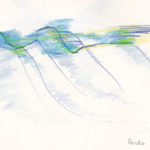
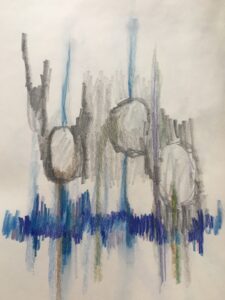
Drawing, colored pencil, from music journal

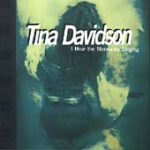
These days are dark and quiet, filled with composing. I have finished I Hear the Mermaids Singing, and wait before copying the pencil score onto the computer.

I live in a world of sound, my ears are filled. When I look up from my work, the house is surprisingly calm, the street empty; the magnolia tree waits to blossom. Looking down again, my ears are flooded.  Sound has never kept me so entranced, so excited. My days are effortless. I am full. Before I touched the surface, now I bathe in the waters. I put my head down in the cool depth and breathe.

∗∗∗∗

There has been good work on my piece. The beginning has a metallic howl, the slow growing melody goes well.

In the afternoon, I walk on the beach. The skies over the ocean are grey; the waves are dark. The wind is so cold that my face aches. I sit in the sand, and watch the overlapping clouds move layers. A bright spot is in the sky where the sun almost comes through. The houses on the ocean are boarded up. Like trees without leaves; they are without life. I trudge past them; their ears are shuttered to winter and the wind.


Excerpted from Let Your Heart Be Broken, Life and Music from a Classical Composer  © Tina Davidson, 2022.

Listen on YouTube:  I Hear the Mermaids Singing, for viola, cello and piano

https://www.youtube.com/watch?v=auLzryCh_Mk

CD, Tina Davidson: I Hear the Mermaids Singing

Buy the CD:

https://www.newworldrecords.org/products/tina-davidson-i-hear-the-mermaids-singing

Filed Under: Uncategorized Tagged With: creative process, listening, mermaids, music, music by women, Tina Davidson, woman composer, writing about music

Cassandra Sings; Changing the Music

January 13, 2021 by Tina Davidson

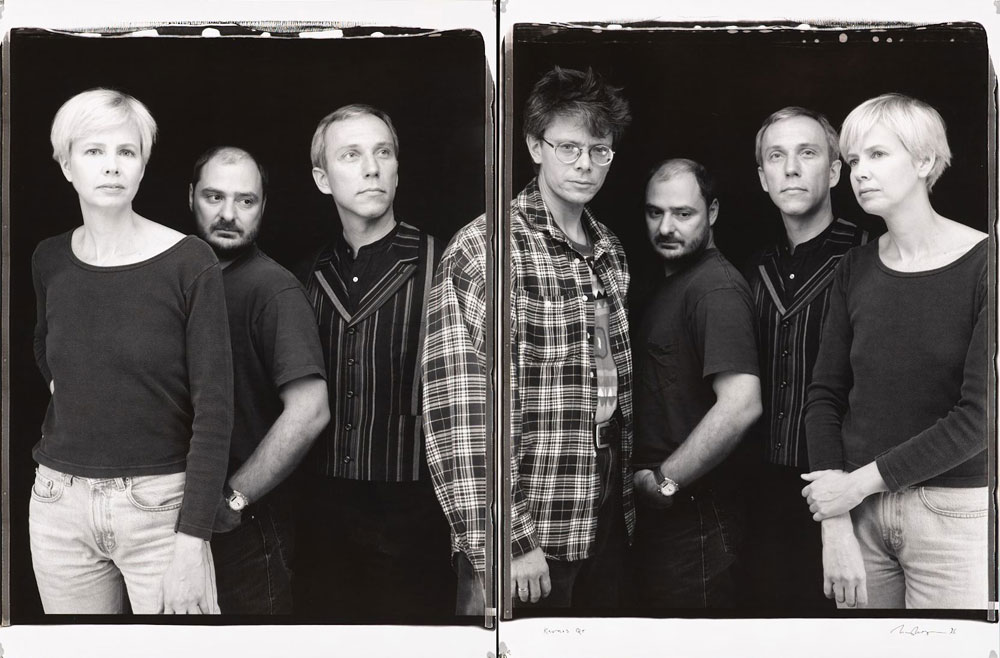
a commissioned by the Kronos String Quartet

One day in 1988, David Harrington, first violinist of the Kronos Quartet, calls me. Weeks before, on a whim, I had sent the quartet a recording of my saxophone quintet, Transparent Victims without invitation or introduction. “We listened to your music and loved it,” Harrington says. “We want to commission you for a new string quartet – say 15-17 minutes long?”  I am astonished. 

Not long afterwards I fly down to the New Music America Festival in Miami to meet with the quartet. I hear them premiere Steve Reich’s powerful Different Trains and Eleanor Hovda’s beautiful and evocative Lemniscates. I sit and dream through their four-hour performance of Morton Feldman’s String Quartet, No. 2.

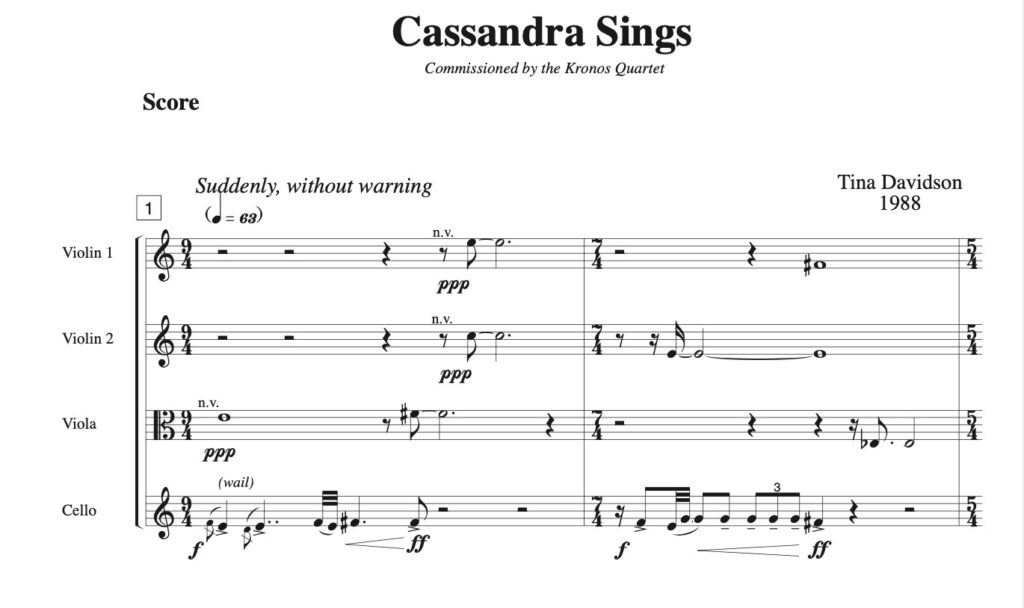
Back at home, I being to compose. I title the piece, Cassandra Sings, after the mythological Cassandra in the play Agamemnon by Aeschylus. There Cassandra ‘sings’ her lines, for she, like the chorus, speaks the truth – she sings the reality of life.

The work on the quartet is a sickening roller-coaster ride. Writing the first section is like going through a manic-depressive storm, at times ecstatic, at others agonizingly difficult. The rhythm tears along, bumping into sounds that are both unexpected and comfortable. I spin through reams of material, yet it is all connected somehow; tense, pressured, chased, inescapable, and swept away. I stitch together the fabric of the piece carefully, paying great attention to the transitions. The direction surprises the ear, and is, somehow, just right. The second section rolls out easily. Already I am at Cassandra’s true joy. My dreams are released. I soar along with my music.

I fly to San Francisco to rehearse with the Kronos Quartet. The week is black and desolate. In three days they have only rehearsed two thirds of my quartet and I have yet to hear the whole piece through. Each day they inch through a small section, making almost no progress. I am exhausted. The weather is bone cold and I take long baths.

A week later I am back with the quartet in Minneapolis. At the dress rehearsal in the Walker Art Center, they play my piece in an extraordinary manner, with every note of this difficult piece in place – except for the last two, a major third echoed an octave below. I almost laugh out loud. “What’s going on with the last two notes?” I ask.

“We felt the ending was too optimistic, so we changed them.” the first violinist, David Harrington explains.

I hold my breath and wait. They have several versions to play for me – a minor third, and dissonant second, but nothing seems right.

Finally the violist says quietly, “Let’s play the piece the way it is written.”

The performance is brilliant, and I go on stage during the applause. David leans towards me. “I withdraw the argument,” he whispers. Next week is the New York City premiere at Alice Tully Hall.


Excerpted from Grief’s Grace, A Memoir by Tina Davidson.  © Tina Davidson, 2021

Listen: Cassandra Sings, for string quartet: http://www.tinadavidson.com/works/#string-quartet-sextet

Recorded by The Cassatt String Quartet, CRI # 671, Emergency Music. Listen on Spotify:

Filed Under: Uncategorized Tagged With: creative process, creativity, kronos quartet, string quartet, Tina Davidson, women composers

  • « Go to Previous Page
  • Page 1
  • Interim pages omitted …
  • Page 3
  • Page 4
  • Page 5

Footer

  • Listen on Spotify
  • Listen on SoundCloud
  • About
  • Press
  • Works
  • Blog
  • Contact
Join The Mailing List

© 2026 Tina Davidson · Photos by Nora Stultz