• Skip to main content
  • Skip to footer

Tina Davidson

Composer

  • About
    • Biography
    • Community Engagement
  • Press
    • Press
    • Interviews & Podcasts
  • Works
    • Works
    • Listen
    • Recordings
    • Publications
  • Blog
  • Contact

Cassatt Quartet

Why I Compose Music as a Woman

May 1, 2024 by Tina Davidson

In these days of growing numbers of nonbinary, gender-nonconforming and transgender people, I have been reflecting on how and why I compose music as a woman. I wince a little as I write this. It does not seem current, or perhaps currently relevant.

I came to composing over forty-five years ago when feminism was in it’s second wave, where the focus was on the inequality and discrimination of women. It was a time when women were speaking out about the marginalization of their choices and expertise, it was about being seen and counted.
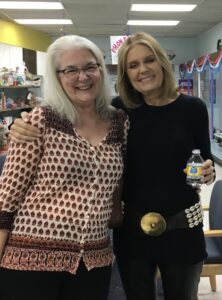
My mother was the first feminist in the family. She read Gloria Steinem, Kate Millett, Germaine Greer and Betty Friedan. She taught women’s studies and went to on countless marches. True, she often spat and lectured. A professor at the State College in Oneonta, mother of five, she knew the limits of her salary and position. She had valid grievances and was angry.

I was a second generation feminist. I read Alex Katie Schulman, Erica Jong, Adrienne Rich and Alice Walker. Early on, I didn’t wear a bra or shave my legs. I worked to pass the equal rights amendment, and went on marches, taking my daughter in a stroller. Feminism, for me, was personal and deeply related to finding my voice in a male dominated music world of the late 1970s. I needed to grow myself, and I wasn’t sure how.

I am reminded of the summer I was eleven and I lived with my aunt and uncle who were scientists in Cambridge, England. One day they brought home small plates from their laboratory coated with agar, a clear medium that fuels microbes and bacteria as they grow. My job was to see what was really on our household surfaces. Carefully I took samples from the kitchen and bathroom and spread them on the agar. Uncle John pressed his thumb on one of the plates. We waited to see what emerged. Colors bloomed several days later, a brilliant white and a poisonous looking orange – a world invisible – existing only when it was allowed to grow by itself.

My agar medium, as I think back on it now, was feminism, or seeing myself as female. And it was Beethoven, oddly enough, who gave me permission to culture and cultivate myself.

Classical music, whose language and history I grew up in, carried forward the idea that music is ‘universal’ in its expression. In 1818, Schopenhauer wrote that music “is such a great and exceedingly noble art …  a perfectly universal language, the distinctness of which surpasses even that of the perceptible world itself.”  Soon came the claim that classical music works were masterpieces – above and beyond our daily lives.

This superlative description of music confounded me. Instinctively, I felt that the artistic endeavor came out of an authentic expression of myself, or as close as I could get to an inner truth. Take Beethoven, for instance. He wrote richly genuine music, an expression of who he was: a white, educated, Christian, and upper middle class. And male.

I shivered. A male aesthetic, not universal at all. And I was female.

With this realization musical world opened up and works came tumbling out. While composing, I held words in my mind that related to myself and the world around me – not to create a ‘tone-poem’ or music describing a story, but as a way of exploring and understanding myself. Cassandra Sings, commissioned by the Kronos String Quartet, was both the anguish of the Greek prophetess who was never listened to or believed, and my hope for better times in the future. Women Dreaming, for mixed ensemble and piano, was my continued dreaming of possibilities. River of Love, River of Light, a seven movement choral piece, was my understanding of the female face of God.
Feminism was, in an odd way, my lucky break. In pushing forward to illuminate the wealth of the individual, giving credibility to the female gender, I found my agar plate. It was a rich medium to explore myself, to grow my work from the hidden secrets of my inner and outer surface. To press my thumb down, and see what was revealed by my print.

After a decade of composing, I softened. I became more digested and reformulated; more fully mixed. My interest began to shift from an inner to an outer relationship to the world, and my gaze looked upwards. What was the connection to the larger whole, to the sky, earth, to the unnamable? From these eyes that belong to a woman?
Filed Under: Contemporary Music Tagged With: Cassatt Quartet, Classical contemporary music, composing music, creative process, feminism, music by women, process of composing, thoughts about musical composition, woman composer

My Heart is a Cello

July 20, 2023 by Tina Davidson

Of all the instruments, cello is the closest to my heart.

Growing up, I was the pianist in a household of strings. My mother was an avid amateur violinist and insisted my sisters learn to play violin and viola. I envied their ability to play with others, while I was continually alone on my own.

In college, I took up cello in addition to studying composition and piano. At times I studied with Michael Finkle, who, mustached, quirky, was full of joy. Up in a large room on the third floor of the music building we gathered weekly to play cello quartets and octets late into the evening. As a night cap, he turned off the lights and we improvised in the dark.
Soon I was transcribing Palestrina and Farkas for cello quartet. Later, I wrote a cello concerto for the wonderful Maxine Neuman, and Dark Child Sings, a cello quartet, which she recorded. And of course, many string quartets and piano trios.

It was Anna Cholakian, the cellist of the Cassatt Quartet, who cemented my love for cello. Delicate and long-haired dark hair, she played with a intensity and passion that belied her small frame.  Listen to her play the opening of my string quartet, Cassandra Sings.

 What exactly is it about the cello that calls to me? The high notes are clear and bell-like, and the low notes have a width and groundedness to them, moist and vibrant.

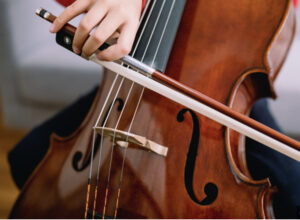
But mostly, the cello is the only classical instrument where you must open your legs and embrace the instrument to play. The broad back of the cello lightly rests against your sternum, almost touching each knee – it is a full body experience of sound. Sitting squarely, you become a tripod, a solid stance with flexibility of movement. You are the cello. You are the music.


CASSANDRA SINGS
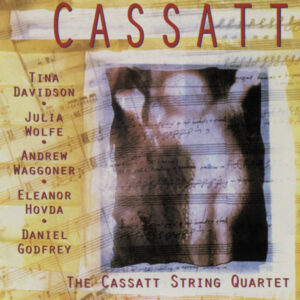
Commissioned by the Kronos Quartet and recorded by the Cassatt String Quartet, “builds to a climax of tremendous richness, throwing out a soundscape that would seem to be much greater than merely four instruments can produce.  An extended coda achieves a resolution of sublime dimensions” (Fanfare).
https://open.spotify.com/artist/2y5Z17bEilAiViMp9FMuJh

DARK CHILD SINGS 
– lyric and rhythmic, and recorded by the Bennington Cello Quartet, New Word Records
https://soundcloud.com/tina-davidson-3/dark-child-sings-excerpt?si=e2a81e6079fc486fa1f3960fc99992ba&utm_source= clipboard&utm_medium=text&utm_campaign=social_sharing


FOLLOW TINA DAVIDSON
Facebook       Instagram

Filed Under: Uncategorized Tagged With: Cassatt Quartet, Cello, creative process, music by women, original compositions, string quartet, Tina Davidson

How Will I Know When to Stop?

May 2, 2022 by Tina Davidson

Timothy stands close to me. When I move, he moves. He waits for me to play his piece with him and follows me like a shadow around the room.
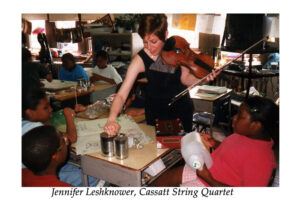
I help Shante with her instrument, calm Ferron down so he can concentrate, and get sidelined by Brandi and Terrell. They work on a piece for two desks and their hands. Experimenting with fingers, palms, and fists, they make sounds on the wooden tops. I step back and almost fall over Timothy; he is patient.

Jake and Michael struggle with their invented notation. Jake’s faces contorts, he cannot figure out how to write his rhythm down. We put words to the melody, and suddenly he claps it with ease.

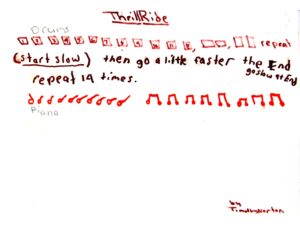
Timothy pushes me towards the piano and I grab a drum. His piece, Thrill Ride, is carefully notated in tiny print. Only he knows what it means, but he has taught me. He begins to play, his long fingers curving around the complicated chords. A dreamy look comes over his face.

“How will I know when to stop?” I press him. He continues to play, immersed in his own sound world. (McMichael Elementary School)

∗∗∗∗∗

Michael’s eyes are full of tears. His small body slumps in the chair. “It’s not fair! I want to work with the cellist.” Tears splash down his face. I study him for a moment, then settle down beside him.

Michael and two other boys were out of the room recording the rap lyrics to the song the fifth grade class had written. During their absence, the rest of the class completed their graphically notated pieces about Homer’s Odyssey. Today, the Cassatt String Quartet joins my residency. Each group will collaborate with a member of the ensemble. The three boys have no composition. I stall, thinking.
“What if you write a new piece for all of the string players right now?” I suggest. Michael runs for the markers and newsprint. Working quickly, the boys write a piece they call Rough Riders from Lotus Town. They fight briefly about how to notate the motorcycle sound.

After a discussion, the Quartet plays the piece for the class. Michael leans into me, smiling. “They played my piece pretty good!” he concedes.  (Nebinger Elementary School)


Excerpted from Let Your Heart Be Broken, Life and Music from a Classical Composer  © Tina Davidson, 2022.

Listen:  Celestial Turnings, string orchestra: excerpt


Tina Davidson created Young Composers program to teach students to compose their own music through instrument building, graphic and invented notation. Designed to enhance self-esteem and reinforce achievement through alternative measures of expression, the course culminates with a performance of the students’ compositions.

Filed Under: Uncategorized Tagged With: arts in public schools, Cassatt Quartet, creating music, creative process, music residencies, original compositions, process of composing, students composing, Tina Davidson, women composers

Random Thoughts, #4

November 1, 2021 by Tina Davidson

from my music journal

October 3

A great day. I can hear. And I am dreaming again. The dreams are busy, as if they were leading my daily life for me while I concentrate on the symbol. My dreams wash dishes, tend the garden, and pay bills. I sleep well, though my stomach is still tender.

I came in and immediately worked out several sections, streamlining the shape of the piece, reducing it to two sections. I get to the point right away. The old sense of balance and confidence returns. The end of the piece is already written, and I am anxious to compose towards it.

Most difficult is to wait until my unconscious offers up the music to my conscious. A patient waiting, an eternal sense of trust, and then suddenly, clarity.

July 10

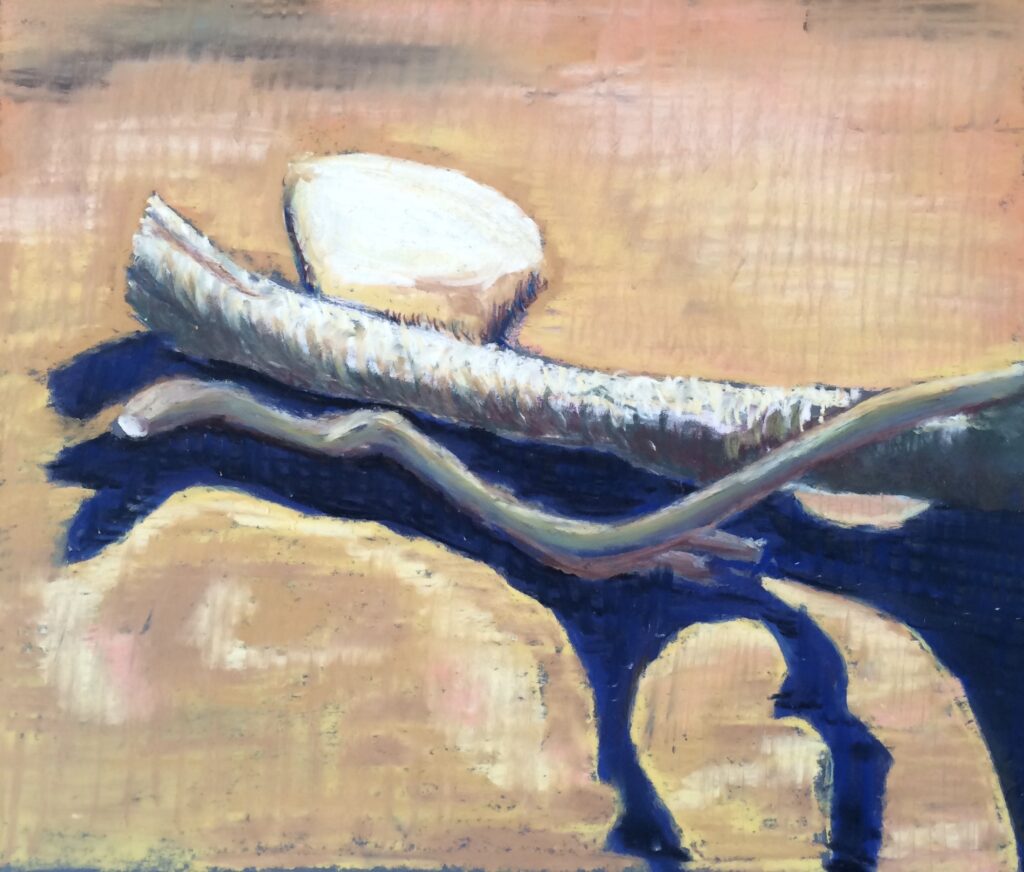
Monday morning. The magnolia tree is dying by degrees. The slender grey branches cross over each other at the base, this year the leaves are small and pale. Overcast day, foolish thoughts. Where do I place grief?


pastel by Tina Davidson

September 1

My music often springs from an idea first formulated in words. The titles come well before the music itself and are, to some extent, my map of the world, guiding me as I compose. They are metaphors or secret encoded meanings for my pieces that I understand, do not understand, and come to understand. Dark Child Sings, for example, is my dark child singing out his life, with growing ecstasy and passion, of sexual beginnings, of calm lullabies and of strong chants.

I have a love affair with the poetry of words. Strung together, they are both important and not, mysterious and clear. Occasionally, words stand in the way of my music, speaking louder than the piece itself, because I simply do not know yet. I cannot dig beyond the phrase.

Music is never just passion or reason, instead a delicate balance between opposites that need the other to exist. Without one there are neither. Reason, brittle and devoid of passion, can be a monster of blindness and self-service. And passion, without reason, is bloated and ridiculous.


Excerpted from Let Your Heart Be Broken, Life and Music from a Classical Composer  © Tina Davidson, 2022.

Listen: It is My Heart Singing, for string quartet:

https://www.youtube.com/watch?v=UYpKICTyO9c

It is My Heart Singing, music by Tina Davidson, Albany Records, TROY842, 2006

Performed by the Cassatt Quartet (Muneko Otani, Jennifer Leshnower, Tawnya Popoff, Nicole Johnson), Stephen Manes and Caroline Stinson

Purchase: https://www.amazon.com/My-Heart-Singing-Tina-Davidson/dp/B000FO443K

Filed Under: Uncategorized Tagged With: Cassatt Quartet, It is my Heart Singing, music journal, process of composing, Tina Davidson

Many are Called

May 1, 2021 by Tina Davidson

I moved to Philadelphia after graduating from Bennington College in 1976. I wanted to test the world as a composer. There was some question about how I should go about it. My brilliant and renegade Bennington teacher, Henry Brant, had no time for graduate school. “Just write music!” he practically shouted. “Write for your friends. Get it performed. Write more.” My parents, however, encourage me to think about graduate school.

My first job was at the University of Pennsylvania. Working full time, I was allowed to take two courses a semester for free. I wrangled a graduate composition class with a well-known composer. One fall afternoon, I brought in the first piece I had written after college for review, a large piece for full band that I labored over.

The eminent composer gravely considered my composition. We sat quietly, expectantly in chairs scattered around the graduate seminar room. Slowly, he turned the pages. The crisp sheets crackled. He looked without comment, and finally closed the score. Sitting back, he crossed his legs and lit a cigarette. Smoke floated and swirled around his face. “Many are called, but few are chosen,” he finally said.

We were silent; the criticism was implicit. My brain whirled frantically. “Get out of here!” it screamed. “Get away from teachers like this!”

 “Many are called, but few are chosen,” says Jesus at the end of the Parable of the Wedding Feast. What does he mean? The word ‘chosen’ implies a selection process. Jesus smiles; he is too full of love for exclusion. Well known psychiatrist and best-selling author Scott Peck deciphers it for me. “All of us are called by and to grace,” he writes, “but few of us choose to listen to the call.”

We are called, we do not listen. We have the capacity; we get sidetracked or confused. Scarcity is a false god. The world is large and full. The ability to create is a birthright. To be chosen, then, is merely to respond to the invitation. We only need believe and surround ourselves with those who say a resounding, infinite yes.

I did not complete the composition seminar that year, nor go on to graduate school. Deciding to take the advice of my teachers from Bennington College, I composed for friends and local ensembles and orchestras. Over the years, the circle widened. The National Symphony, Philadelphia Orchestra, the Kronos Quartet, The St. Paul Chamber Ensemble, and Hilary Hahn.

Showing up, I write the music.


Excerpted from Let Your Heart Be Broken, Life and Music from a Classical Composer  © Tina Davidson, 2022.

Listen: BLUE CURVE OF THE EARTH for solo violin (or violin and piano)
Commissioned by Hilary Hahn and recorded on Deutsche Grammophon in 2013 & 2018
“Grows into a lyrical world that literally seems capable of embracing the horizon. It is a shamelessly lovely piece.”  (Communities Digital News)

https://www.youtube.com/watch?v=2AaS8MkuQs8

Filed Under: Uncategorized Tagged With: Cassatt Quartet, Jesus, music journal, students composing, Tina Davidson, women in the arts, young composers

Footer

  • Listen on Spotify
  • Listen on SoundCloud
  • About
  • Press
  • Works
  • Blog
  • Contact
Join The Mailing List

© 2026 Tina Davidson · Photos by Nora Stultz