• Skip to main content
  • Skip to footer

Tina Davidson

Composer

  • About
    • Biography
    • Community Engagement
  • Press
    • Press
    • Interviews & Podcasts
  • Works
    • Works
    • Listen
    • Recordings
    • Publications
  • Blog
  • Contact

Uncategorized

RENDER for string quartet

October 1, 2018 by Tina Davidson

to relinquish, surrender, turn over

Out of the blue I have a private commission from Susan Grant and Lawrence Maisel. I am delighted – this is very special. Usually I am commissioned by an ensemble or an organization who has applied for grant money. In this case, private individuals want to invest their own money in a composer and the creation of a new work. I am grateful and eager to engage them in the process.

We meet several times in NYC to get to know each other. As we talk, two ideas emerge. First they are excited to be my companion as I create this work, and secondly, they are interested in my idea to create an alternate version of the work (or “telescoping”) to include student performers. We agree that I will write a string quartet for the Cassatt Quartet with the premiere in the spring.
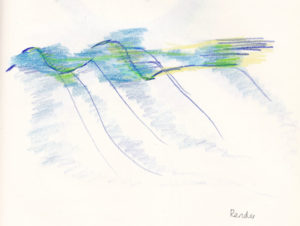
As I begin work my new piece, the word “render” keeps coming up for me. I don’t know why. It is the process by which one melts fat or lard in order to separate out impurities. It is also means to be, become, or make; from Old French, render means “to give back, deliver.” And in artistic terms, it is to add color or shade an image.

I draw and think, not knowing how or why I need to write a string quartet with this word in mind.

“to cede, cough up, deliver, give up, lay down, relinquish, surrender, turn over, yield.” (Merriam Dictionary)

Of course – to yield, surrender! This life process of letting go of control, separating out impurities through heat and sometimes by force, then shading and adding color.

I write a large one movement piece for string quartet with two bookends – short pieces that include student performers in addition to the string quartet. The work can be performed with or without the bookends.
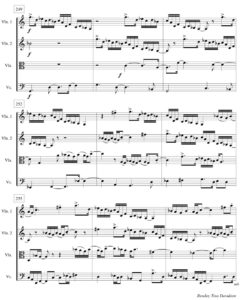
My music evolves over time rather than in big leaps. I always push at the edges of my content – not so much to create something new, but to nudge it to the next place – wherever that may be. So I am in love with the section where the uppers strings fall and slip down only to start over, while the cello swims up stream. I wake in the middle of the night to this section playing in my head.

I meet with Susan and Larry often over the next six months. We go to concerts or spend long hours over dinner. I arrange for the Cassatt Quartet perform Render for them and their friends before the concert. A casual affair in their large living room, we lounge, listen and talk late into the night about the new piece, music and the creative arts.

The premiere performance is at the Tenri Cultual Institute in NewYork City the following week. I now have a new piece, a great performance, and also two new dear friends in Susan and Larry – an unexpected blessing.

LISTEN:
Filed Under: Uncategorized

Performing Side by Side

October 1, 2018 by Tina Davidson

Ownership of music

My years of experience in community settings has brought me to understand that engaging the public, especially children, is much more than talking to or performing for them. It is about bringing them into the heart of musical experience and giving them ownership of music – a long and resounding affirmative. Yes, you can compose (without years of study). Yes, you can perform with professionals; I will write those pieces for you.

During a three-year residency at the I have my first opportunity to create a work that included students performing with professionals.

I write Paper, Glass, String & Wood for three quartets, one professional and two student quartets of different abilities.

I ‘telescope’ the piece – providing multiple performance possibilities: for professional quartet and two or three quartets, or for professional string quartet and student string orchestra.

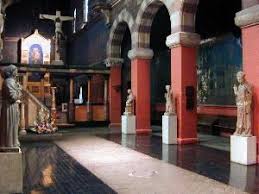
The musicians rehearse the new work in the dark sanctuary space of the Fleisher Art Memorial. Eight students from area high schools join the professional performers made up of members from the Philadelphia Orchestra. The students are quiet and wide-eyed.

There is an ebb and flow to the rehearsal. The cellist lifts his head and cues the violinist with a smile. At an intonation problem, the quartet plays the offending section at a snail’s pace, checking the tuning. The first violinist leans back to the student quartet and asked them how they were rubbing the strings to produce a sound effect in their parts.

What is it when you share these moments? The total is always much more than the sum of the notes. It being able to be in the energy and joy of playing together while discovering a new work. It is being able to directly experience how musicians, like a magical school of fish, move through the music, bending and nodding at each other, smiling, adjusting, and pausing; both individuals and community at the same time.

The young musicians are rapt, shy and curious. They ask me questions, and wonder out loud. Being a professional musician is no longer an abstract concept; they now can feel and smell it. Standing close to me while the quartet practices alone, one of them whispers, “I never thought I would go into music as a profession, and now…” his voice trails off.

So many possibilities in that “and now.”

Paper, Glass, String & Wood is recorded by the Cassatt Quartet on Albany Records.

Tina Davidson: It Is My Heart Singing

Filed Under: Uncategorized

I Am the Cool Water

July 20, 2018 by Tina Davidson

Merce Cunningham and me

I began as an indifferent musician. My mother started me on the piano when I was five, and by the time I was seven I practiced an hour a day. She gave me an allowance of five cents an hour, which I renegotiated, sometime later, to ten cents. I worked my entire childhood.

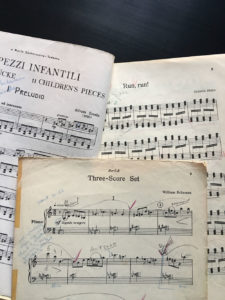
My piano teacher was a patient, kind man with thick dark-framed glasses and slicked down hair. The music he gave me was unusual and often contemporary; Persichetti, Bartok, Casella, Vila-Lobos, Pinto, Ibert, Debussy, and William Schumann. Sometimes I practiced, but often I did not. I was in love with books.

All day, I lounged reading; curled on study chairs, sprawled on the living room floor, face down on the top bunk bed late by the hallway light. As I fell asleep, I put my book under the mattress. I reached for it first thing upon waking.

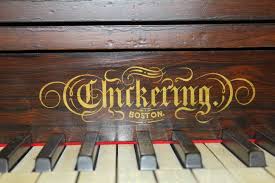
One week, I decided I would read while I practiced the piano. While my mother prepared dinner, I sat in the dark living room at the Chickering upright she had gotten for free. The piano was enormous, and sat like an overstuffed chair in the corner of the room. The cracked keys had long ago sunk into the frame, and the circular piano stool creaked and rocked. Placing my novel carefully on the rack, I began to practice from memory while I read my novel. Oblivious to many of the smaller details of her children, my mother called out encouraging remarks from the kitchen as I stumbled through my pieces.

My piano teacher wasn’t as easy to fool. At my lesson, he opened the first piece I was learning. There was no obvious progress. He closed the music without comment. He opened the next piece with similar result. Five minutes in on the hour-long lesson, I slumped at the piano. He picked up his car keys, “I’ll drive you home,” he said quietly. I sat in the easy chair in the corner of the dining room and cried, what seemed, the whole afternoon.

By then, I was in love with dance. I read about early ballerinas and seeped myself in Diaghilev’s Ballets Russes, and the great dancers Vaslav Nijinsky and Anna Pavlova. I clipped magazine articles about Rudolf Nureyev and Margo Fontayne, following their every move.

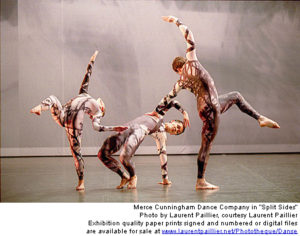
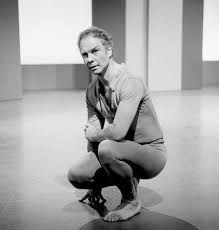
When Merce Cunningham and John Cage came to my mother’s college for a week one spring, she arranged for me to leave my sixth grade class, walk across the school playground, to the open rehearsals. I knew almost nothing about modern dance or electronic music.

There was a hush when I entered the darkened auditorium. Dancers, in leggings and sweatshirts, sprawled on the stage stretching in the dim stage lights. I walked past John Cage and David Tutor setting up their equipment. Stage lights came on and off, and a disembodied voice called down from high.

Finally, the main spotlight came on, and Merce Cunningham walked slowly into the light. Dressed in white tights and leotard, he rippled like a cat, his fawn-like face was large and luminous. I only remember the deliberate, beautiful motions, the quietness and grace.

Music has been, in part, an answer to a long call. I was born into a long line of ancestors who loved music but never did it professionally. My mother’s mother was a self taught pianist, my mother a skilled amateur violinist. My paternal grandmother’s Steinway grand piano sits in my studio; my father played jazz every evening after dinner.

Merce Cunningham opened a door in me to something I could not name. My heart softened and yielded to the essence of the purity of the moment. There was more out there than I had imagined. I came out into the quiet afternoon forever changed.

Music is also something deeper. As early as I can remember, I would lose myself for days; sometimes for months or years. Pulling back from the sharpness of the moment, I slipped into the coolness of a murky lake. The world receded, the water made the downy hairs on my face stand on end. Air escaped from my nose and the bubbles clung to my face.

Part survival, part addiction, clinicians describe this as dissociation. In the dark parts of my life, I was happy to lie down in the earth, and draw the dark wet leaves over my head. Always a peaceful, cool reprieve from what was around me, where the muffled sounds of life are no longer all absorbing.

Music has the same call to me. The hidden lake is cool and unrippling. I swoop down and fly close to the surface, almost touching the water with my body. I turn up in the air, high, into the skies, then dive down to skim the surface again. Hearing becomes everything; the rush of the wind on my cheeks, the thump of my heart, the creak of my body, and the cool of the lake. I am bodiless, just a swoop, a streak of energy; I am pure joy and delight in my own agility. As I sink into sound, I am the wind, I am the rush and the burble, I am the cool water.

Excerpted from Grief’s Grace, A Memoir by Tina Davidson

Filed Under: Uncategorized

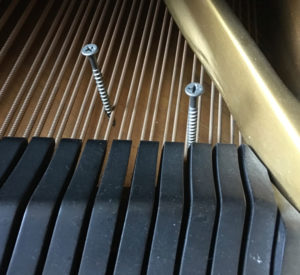
Why I Put Drywall Screws in My Piano

July 16, 2018 by Tina Davidson

I am writing a piece, Wēpan, for string quartet and piano. I fiddle at my grand piano, my grandmother’s Steinway she purchased in 1921. I never much cared for the sound of this piano until I reluctantly moved it to my house. As the instrument slowly acclimatizes to my space, my affection grows, the bass become more resonate, the treble less piercing.

But today, I am looking for a sound for my new piece. I slowly thread a long dry wall screw between the twin D bass strings and another a bit higher. The notes, when articulated are almost unearthly – like a dark stabbing. Position the screws just right and the harmonic series lights up. I can hear the music of my new piece ducking and merging into this strange sound.

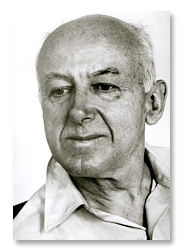
I am suddenly reminded of one of my personal heroes – Henry Cowell and his work with extended techniques for the piano. He was a great American original, and now very much forgotten along with Carl Ruggles, Dane Rudhyar, and Conlan Nancarrow.

Cowell paid little allegiance to the European inspired contemporary music or atonalism; he was his own man. At sixteen, so legend tells, he made enough money at an odd job that he bought a piano. I imagine him scooting his new acquisition through the cobbled streets, and once safely inside his home, tearing away the wooden casing and thrusting his hands inside the piano’s underbelly. Drumming, strumming and arm rolling, Cowell beget a whole new way of producing sound at the piano.

In truth, the piano is an strange beast; part string and part mechanical.

Most instrumental performers have an immediacy between themselves and the sound they produce. A string player presses flesh into string, using the bow to bring the pitch to life. For winds and brass, breath becomes tone. But pianos have this odd intermediary – I press down the piano key and the piano action throws a hammer at an inner string to produce the sound. I do not touch the string.

Of course, there are many ways I can play one note or sound on the piano – I can strike the ivory with the fleshy part of my finger, or closer to the bone. I can roll off the key feathering the tone or flick it into the air. I can adjust my body weight as I play, plunging into the sound with the torque of my back, or relax, swooping in with a gentle slide. But, how can I touch the sound itself, this living, breathing organism?

I experience a single note or tone as having an outer shell-like-flesh with a soft inner core. The outer layer repels somewhat, but the inner core yields. I long this center of sound, wanting to get as close as I can. Like the way I am at an art museum, standing as close to the corner of a painting as the guard will allow, peering in, desirous of folding into the field of colors and stroke.

I fantasize that each tone has an evolutionary life story. Long, long ago it lived in a shadow land of half; muted, slipping and sliding – before it was pitch. What I call pre-sound; this the territory of the inside of the piano that Henry Cowell reveals.

Delving into Cowell’s works taught me to listen and investigate deeper than melody or rhythm – to hear sounds as separate, individual, and having a life of their own. He inspired me to think of the actual essence of sound itself, bare, stripped down and fundamental.

The drywall screws in my piano for my piece, Wēpan, is the color of deep earth and high dark caverns. Metallic, hollow, jagged, rough, both lingering and disappearing – exactly what I need.

By the way, have you ever tried dental floss on the lower strings of the piano?

Listen to an excerpt of Wēpan for string quartet and piano.

For more on Henry Cowell, read the New York Times article, Henry Cowell—An Influential ‘American Original’.

Filed Under: Uncategorized

Composing Music as a Woman

June 13, 2018 by Tina Davidson

Only when a composer is true to upbringing, gender, sexuality and cultural heritage can the work be meaningful and transcend the individual.

The winter weather is icy during the Chamber Music Conference in New York City. I have been asked to meet with Annika Socolofsky, a composer, avant-folk vocalist, and fiddler, currently a graduate student at Princeton. We meet off the main hall and sit talking about being a composer, going to school and getting works performed. She pauses.

“Do you compose music as a woman?” she asks tentatively.

I smile. “How could it be otherwise?” She relaxes and nods.

This age old question, even now – as if gender is not an integral part of being. I compose what I am; a woman, daughter, mother, stepmother – a privileged well-educated white woman, older, somewhat worn, and in the last quarter of my life.

Is this still heretical?

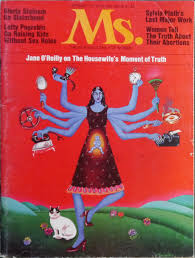
Over twenty-five years ago I wrote a widely-circulated article addressing the same question for Ms. Magazine titled Cassandra Sings (Distinctive Voices of Women Composers). Recently I reread the article with interest. Much has changed, but some things not.

Back then women were vocal about denying their gender.

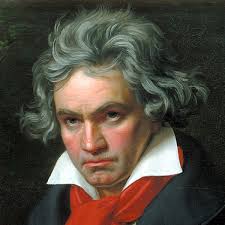
Listen to this from a well-known, Pulitzer prize winning, woman composer: “Nobody refers to Beethoven as a male composer … It’s obvious that I’m a woman and my womanhood is important to me. But I don’t write music as a woman or as a man; I write music as a composer.”

These are haunting words for they begin with a separation of self.

The issue of gender in the arts, I believe, is hidden in the concept of classical music itself.

At the heart of all this is the relationship between classical music and its extension into living culture — contemporary music. To understand the female position as a composer is to understand the classical music world.

The new music world finds its roots and past in western classical music — that of Beethoven, Mozart, Schubert and Brahms. Contemporary music is viewed as a rather unruly child. So enamored are we with classical culture, that major symphony orchestras play only about 1% of music by living composers and 99% of traditional classical music.

The figures are slightly better these days. I read online a recent article released by the Baltimore Symphony. Based on data from 89 symphony orchestras, the split is 88% classical music with 12% living composers, of which less than 2% are by living women composers. (The data catches me by surprise and I have to stop to breathe for a moment; only 2% are women composers!)

Talking about what classical music is and who wrote it, in some ways, is at the crux of women composers’ definition of self.

Classical music was written and defined by white, European, Christian males, who (insult to injury) happen to be all dead. To be exact, classical music is a male-defined aesthetic. While this in itself is quite extraordinary, it is the attitude that music is universal which is so damaging. It’s true, no one ever calls Beethoven a man, because no ever has to. He was part of the ruling class that never needs to define itself as anything more than universal, or “for all of us.” Since universal has become synonymous with male (and white), gender is omitted as it defines not yourself, but your inferiority. Thus the issue of who is speaking and what is being said is faultlessly hidden.

I am not suggesting that classical music has nothing that is relevant to this generation. Far from it. The classical music composer wrote good, honest music. He was true to his upbringing, society, place and gender. Universality can be achieved only in this way — by knowing who you are.

Oddly enough, to be universal is to speak from a deeply personal place.

All artists, no matter what the discipline, must come to find their face. Only when a composer is true to upbringing, gender, sexuality and cultural heritage can the work be meaningful and transcend the individual. If a composer prances around in someone else’s clothing, it sounds hollow and incomplete. When a composer communicates a self, which is authentic and not denied or compartmentalized, oneness between listener and artist emerges. That wonderful “ah-ha” of communication is then universal, for it is honest sharing.

I remember almost to the hour…

…when I realized that classical music was not me — I almost stopped breathing. What did this mean to me?  How had my affiliations put blinders on me?  In the absence of male written work, what was female? Then a wonderful feeling of excitement and delight came over me. There was so much to explore, so much to find out and it was all inside.

For instance, what is sexual energy in music? In classical music the climax (don’t you love the nomenclature?) is the culmination of rhythmic and harmonic tension. The climax arrives in a pumping, stumping, squirting fashion, collapsing into a kind of stewed silence. Now I ask you, is that me? (okay, perhaps sometimes).

But truthfully, my sexuality seems dark and powerful. It comes out of a center place and is wide, continuous, warm, moist. My physical energy is long and deeply rooted. It goes on and on, winding from one rhythm to another, slowly moving out, until, at its peak it is suddenly transformed into something else — a glowing, evanescencing energy. This, for me, is not a climax, but an epiphany.

Years later I turned my attention to being a mother, a unique and wondrous experience that rarely comes into music. My opera, Billy and Zelda, explores what I consider the greatest love story – that between a parent and child. It is the only opera I know where the main character is pregnant. (How has this story escaped contemporary opera?)

Now, I am interested in exploring myself as an older woman, this ending that is as important and, I hope, as celebratory as the beginning.

Gender is not all of what one is, but to exclude it is to lose a large part of oneself. Our journey is individual but shaded by all parts of ourselves. Complicated, complex, full of twists and turns. In the Ms. article I return to Pauline Oliveros.

But what does it matter to us, the listeners?

Pauline Oliveros, in her book Software for People, suggests that music, as it is created by men, is only half of the equation. The other half is emerging through the work of women composers. It’s not that one half is better or more important than the other, it’s just that, as Walt Whitman says, “lack one, lacks both, and the unseen is proven by the seen.”  We all need both halves.

In fact, we’re entitled.

Cassandra Sings (Distinctive Voices of Women Composers), by Tina Davidson, Ms. Magazine, 1992.

Listen to music from Tina Davidson’s opera, Billy and Zelda:

Filed Under: Uncategorized

  • « Go to Previous Page
  • Page 1
  • Interim pages omitted …
  • Page 8
  • Page 9
  • Page 10
  • Page 11
  • Go to Next Page »

Footer

  • Listen on Spotify
  • Listen on SoundCloud
  • About
  • Press
  • Works
  • Blog
  • Contact
Join The Mailing List

© 2026 Tina Davidson · Photos by Nora Stultz